


 Info
Info Previews
 Stream
 Download it!
 Soundtrack music
 Print flyer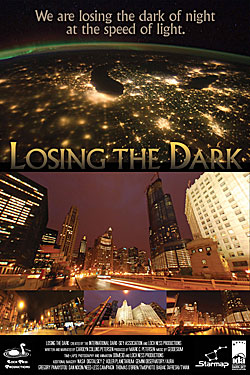
in collaboration with

Losing the Dark
A short public service announcement about light pollution
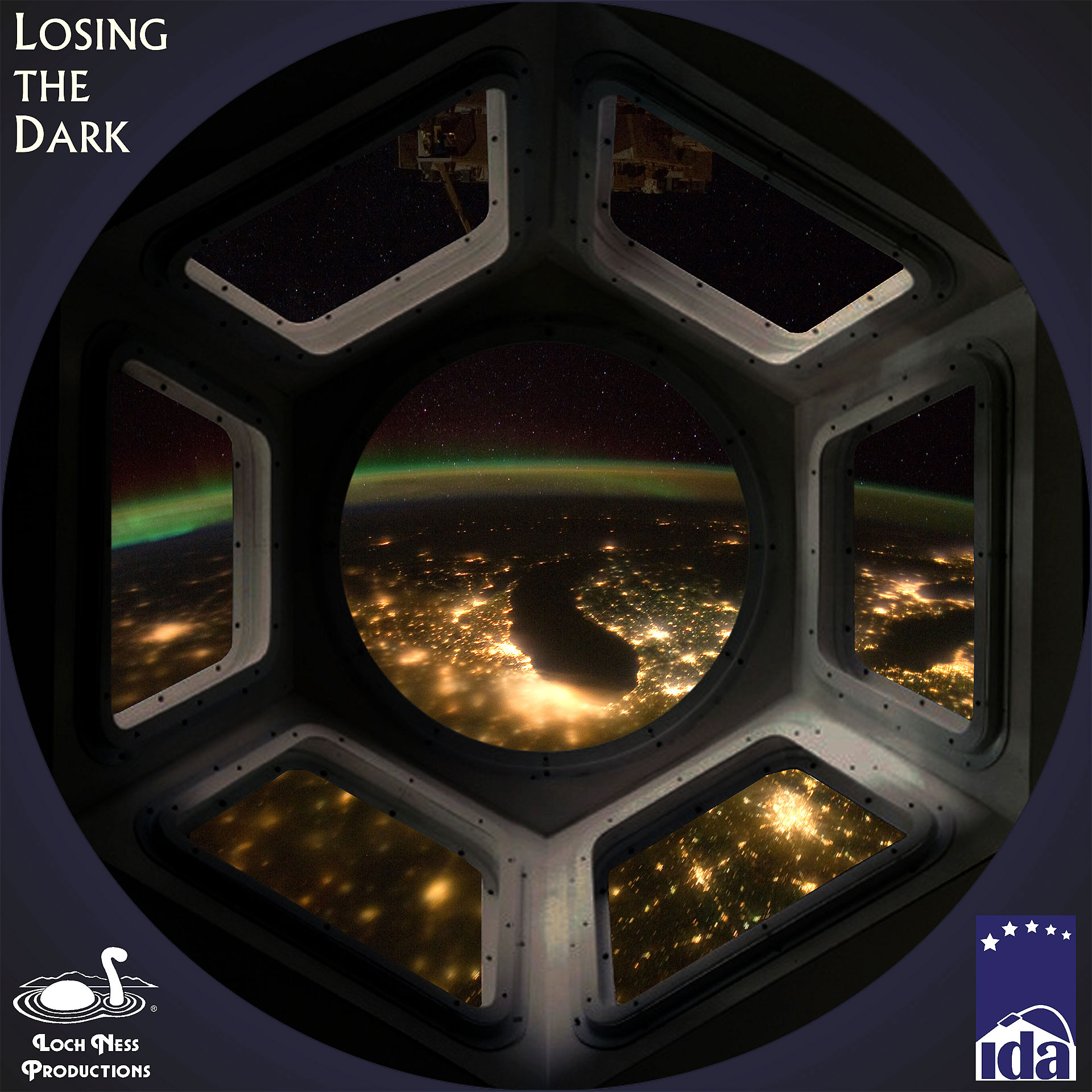 Starry skies are a vanishing treasure because light pollution is washing away our view of the cosmos. It not only threatens astronomy, it disrupts wildlife, and affects human health. The yellow glows over cities and towns — seen so clearly from space — are testament to the billions spent in wasted energy from lighting up the sky.
 Losing the Dark is a "public service announcement" planetarium show, a collaboration of Loch Ness Productions and the International Dark-Sky Association. It introduces and illustrates some of the issues regarding light pollution, and suggests three simple actions people can take to help mitigate it. The show gives planetarium professionals a tool to help educate the public about the problems of light pollution. Planetarians are uniquely positioned to teach audiences ways we can all work together to implement responsible use of lighting.
 Losing the Dark has no license fee! We have rendered the show in many formats and languages — just go to the appropriate Downloads page.
 In addition to the fulldome version for digital planetarium use, we have rendered Losing the Dark as a conventional flat screen video. It's on YouTube, available for online viewing, sharing and embedding on blogs and Web pages. It can also be downloaded, for use in classrooms, kiosks, museum theaters, and advocate multimedia presentations. Classic planetarium theaters without fulldome capability can show this version using their traditional video projectors.
 Loch Ness Productions and the International Dark-Sky Association are pleased and proud to make Losing the Dark available to planetarium theaters, educators, and viewers around the world!
If we all work together, we can bring back the dark of night to planet Earth.
PRODUCTION FUNDING PROVIDED BY A GENEROUS DONATION FROM:
 Running time: 6:24
Suitable for: General public
Information about: Light pollution
Year of production: 2013
 Losing the Dark is copyrighted by the International Dark-Sky Association and licensed under a Creative Commons Attribution-NonCommercial-NoDerivs 3.0 Unported License
|
Starmap — an award-winning interactive planetarium app for iPhone, iPod, and iTouch. Starmap provided major production funding and other support for Losing the Dark. |
the Fred Maytag Family Foundation — for its generous support for the projects of the International Dark-Sky Association. |
|
 |
the International Planetarium Society — a world-wide organization of planetarians. IPS generously offered seed money to start this project. |

|
the members of the International Dark-Sky Association — whose mission is to preserve and protect the nighttime environment and our heritage of dark skies through environmentally responsible outdoor lighting. The IDA Education Committee headed by Dr. Connie Walker provided science consulting support for Losing the Dark. |
 |
National Optical Astronomy Observatory — one of the world's premier astronomy observatories. NOAO provided scientific and administrative support for this project. |
Losing the Dark is a joint production of the International Dark-Sky Association and Loch Ness Productions.
Writer/narrator:
Audio/video production:
Music:
- Geodesium
From the albums:
 Arcturian Archives
 A Gentle Rain Of Starlight
 Stellar Collections
Time-lapse photography and animation:
- Dome3D
- Loch Ness Productions
Additional imagery:
- NASA
- DigitalSky 2
- Adler Planetarium
- Gregory Panayotou
- Gemini Observatory / AURA
- Dan Nixon / Need-Less Campaign
- Thomas O'Brien / tmophoto
- Babak Tafreshi / TWAN
Special thanks:
- Dr. Connie Walker (NOAO) and the IDA Education committee
PRESS RELEASES:
27 February 2013 — Losing the Dark announced
PRESS KIT:
LosingTheDark_presskit.zip (~126 MB)
This press kit contains all the material seen in this section: the poster at various resolutions, the press release, and the still frames with captions and credits. Please properly credit all images used.
POSTER

Download 7200x10800px poster:
ltd_poster.zip (~9MB)
Download hi-res poster PDF:
ltd_poster_hi-res.zip (~90 MB)
Frames from the fulldome video (select for high-resolution)
The glow of city lights is obvious even from space, as shown in this video of the Great Lakes region, as seen from the cupola module of the International Space Station. Video time-lapse imagery courtesy NASA; composite created by Loch Ness Productions. CREDIT: Loch Ness Productions/NASA.
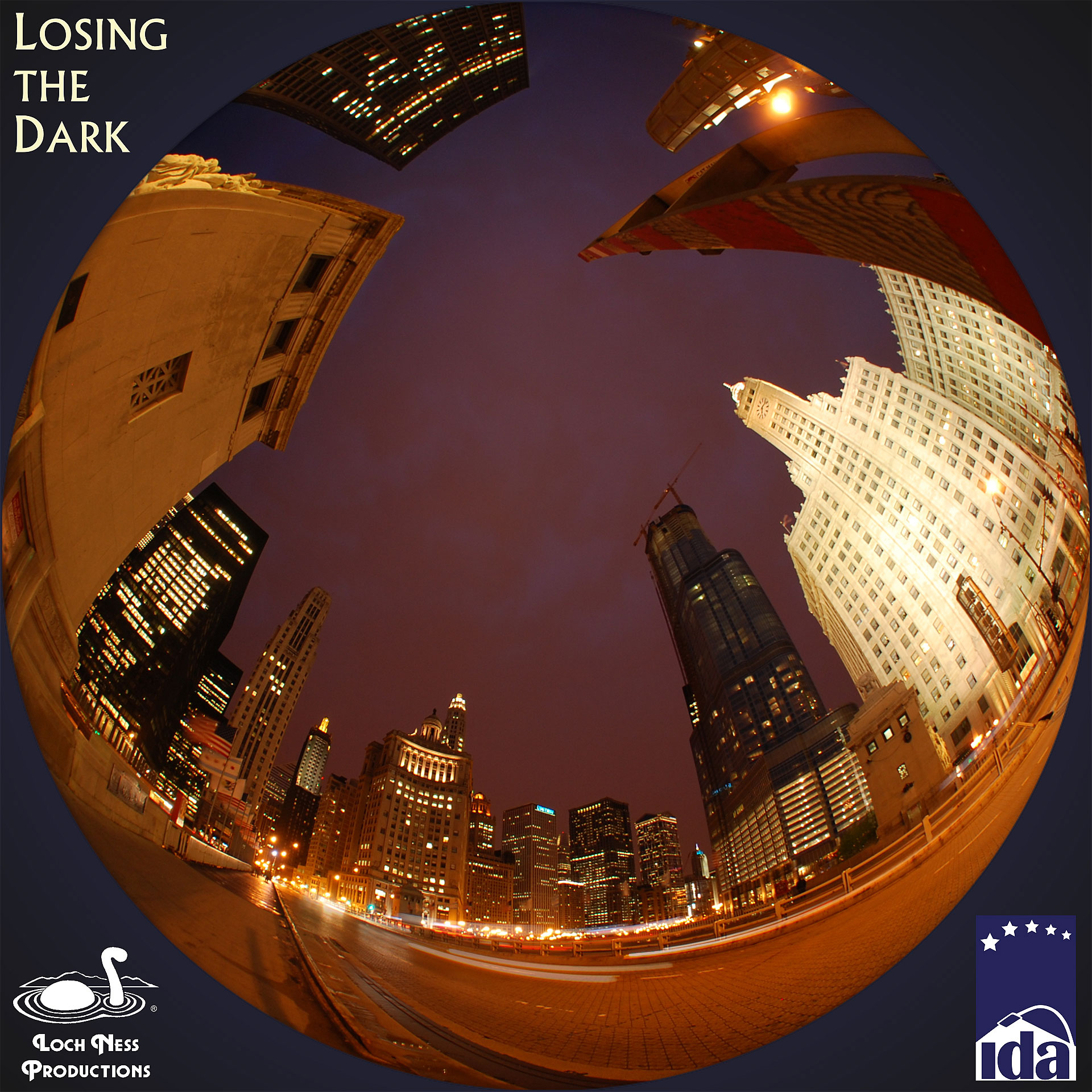
The glow of Chicago city lights as seen from street level. From the fulldome video Second City by Dome3D. CREDIT: Loch Ness Productions/Dome3D.
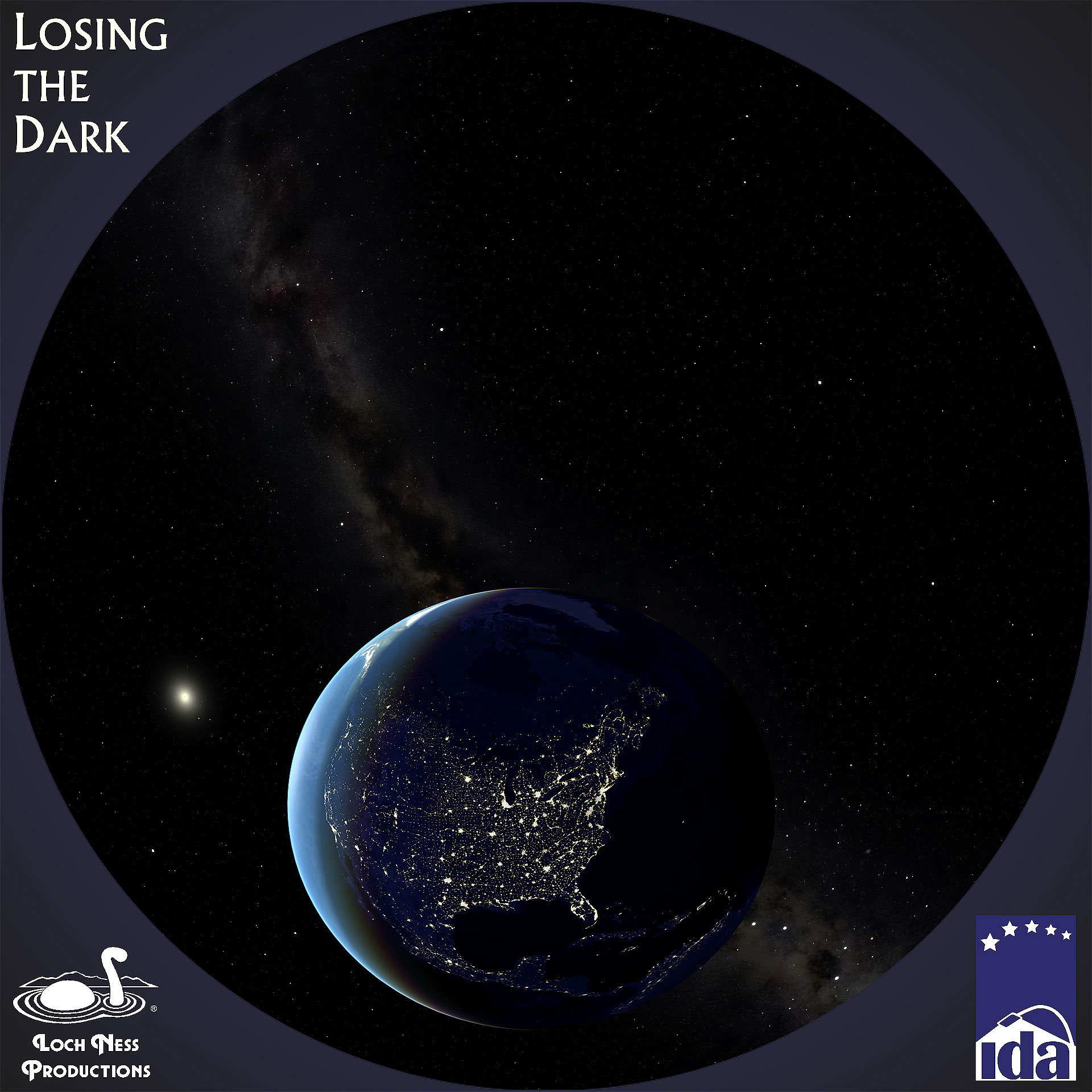
The glow of city lights outlines roads and cities in the eastern United States as night falls on Earth, set against a backdrop of the Milky Way. This image was created using DigitalSky2 from Sky-Skan, Inc. CREDIT: Loch Ness Productions/Sky-Skan.
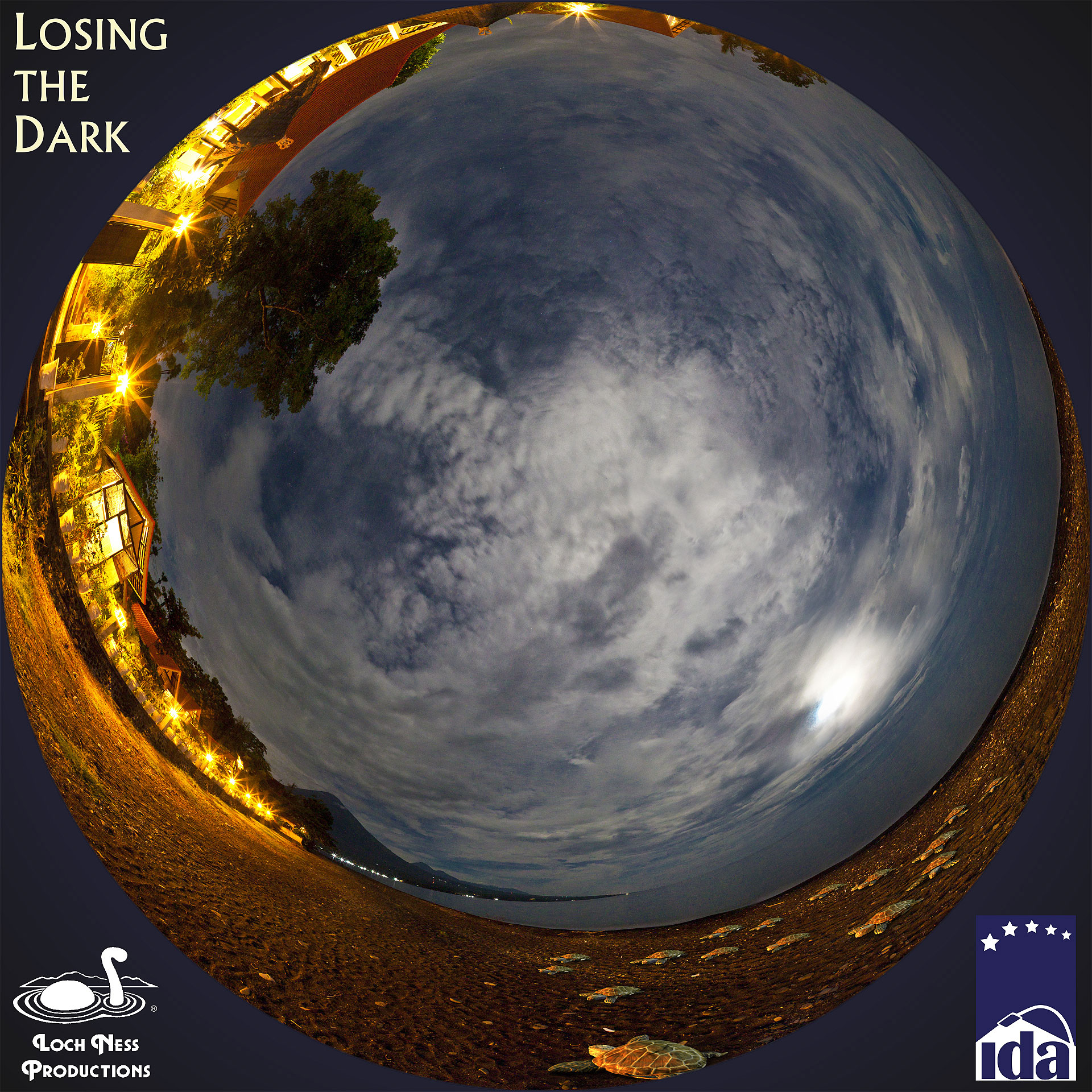
Sea turtles are often disoriented by light pollution, leading them away from the safety of the ocean toward brightly lit streets and yards in beach communities. Each year thousands of turtles perish. This still shows a beach scene in Bali courtesy Gregory Panayotou, 360Cities.net composited with CG-animated turtles by Dome3D. CREDIT: Loch Ness Productions/Gregory Panayotou, 360Cities.net/Dome3D.
Frames from the flat screen video (select for high-resolution)
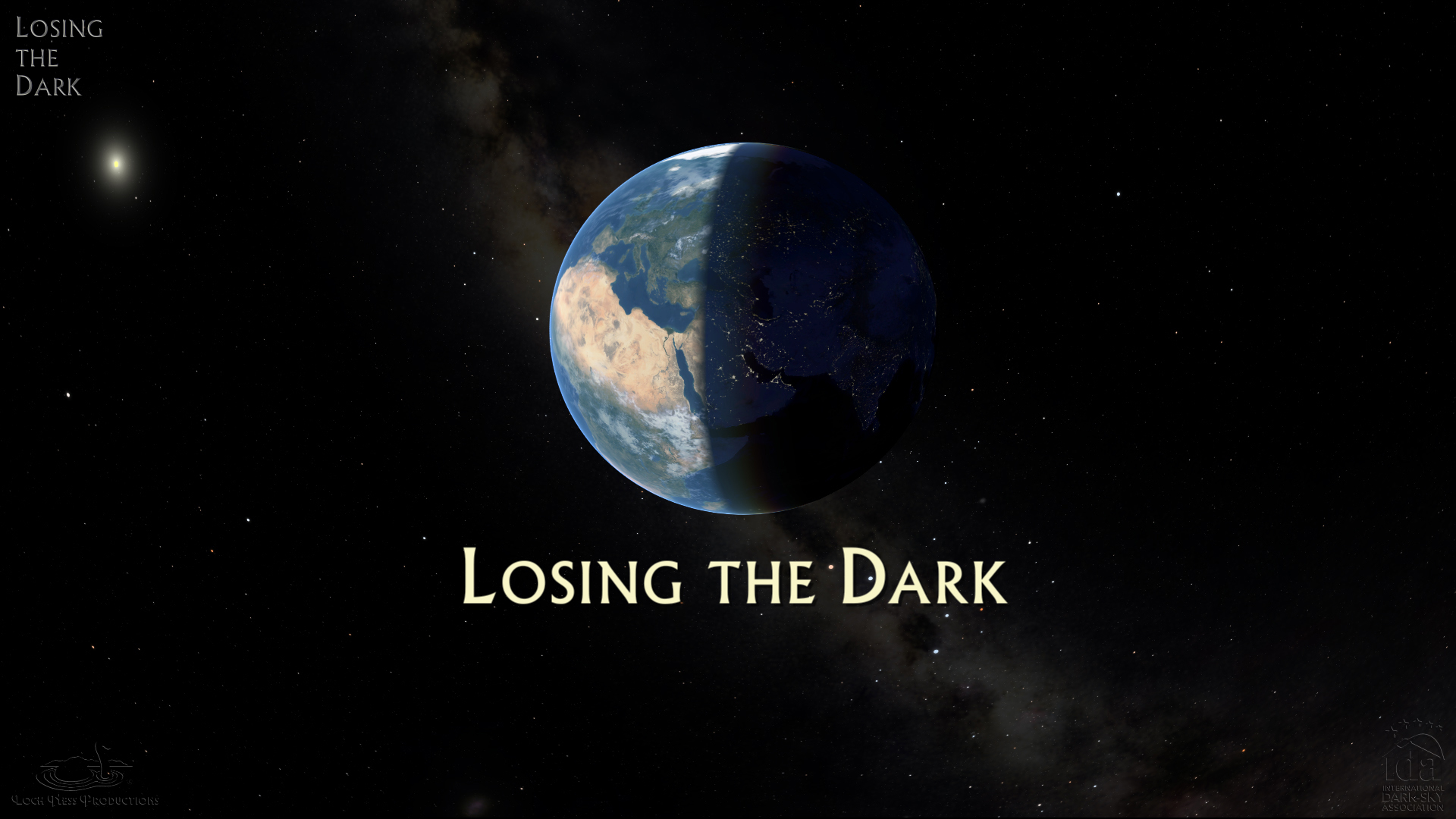
A frame from the title sequence of Losing the Dark. CREDIT: Loch Ness Productions.
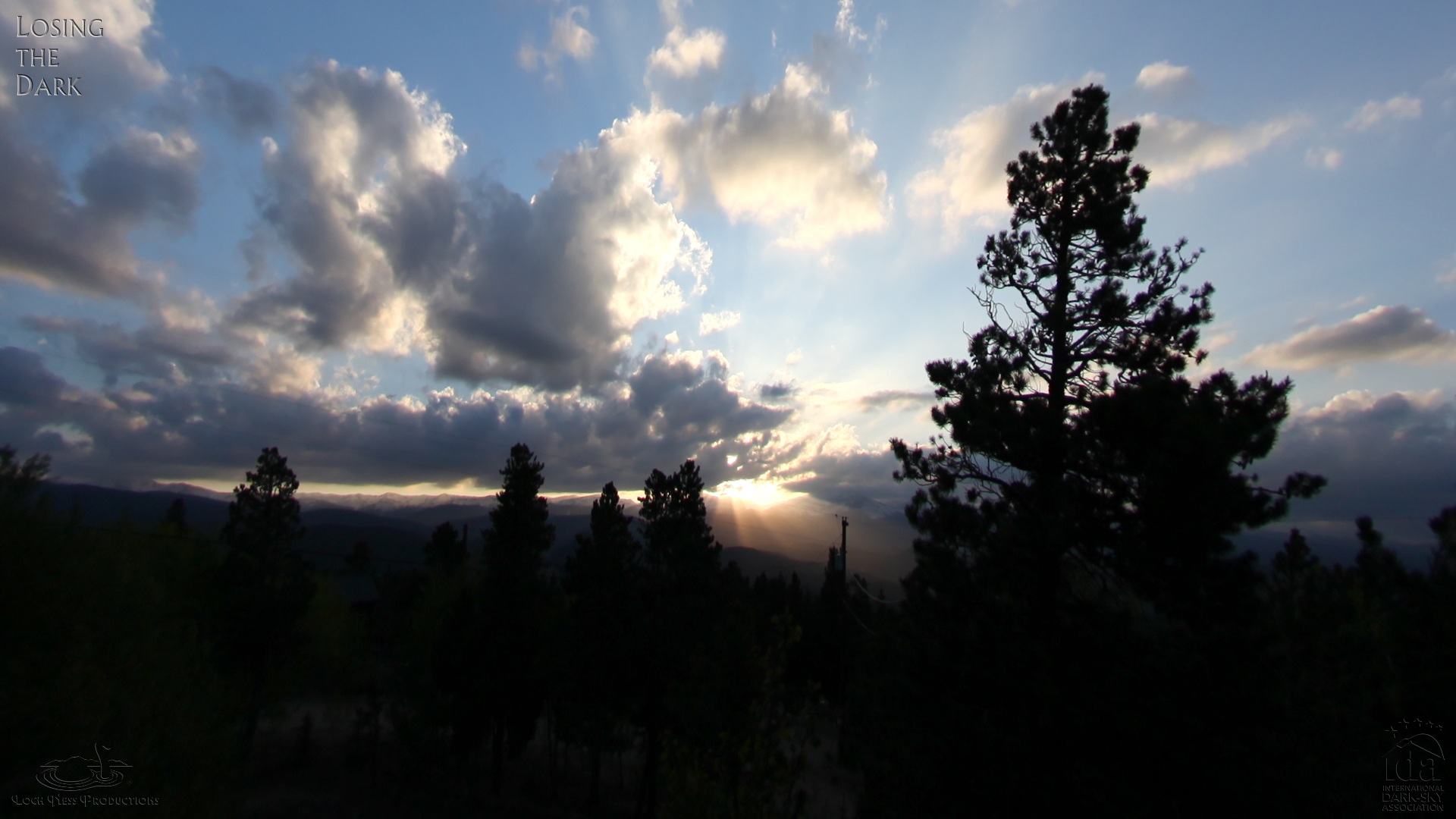
A frame from a time-lapse sequence in Losing the Dark showing sunset in the wilderness. Shot by Mark C. Petersen. CREDIT: Loch Ness Productions.

A still frame from a sequence in Losing the Dark showing light pollution's effect on the wilderness. Shot by Thomas O'Brien, TMOPhoto.com and used by permission. CREDIT: Loch Ness Productions/TMOPhoto.
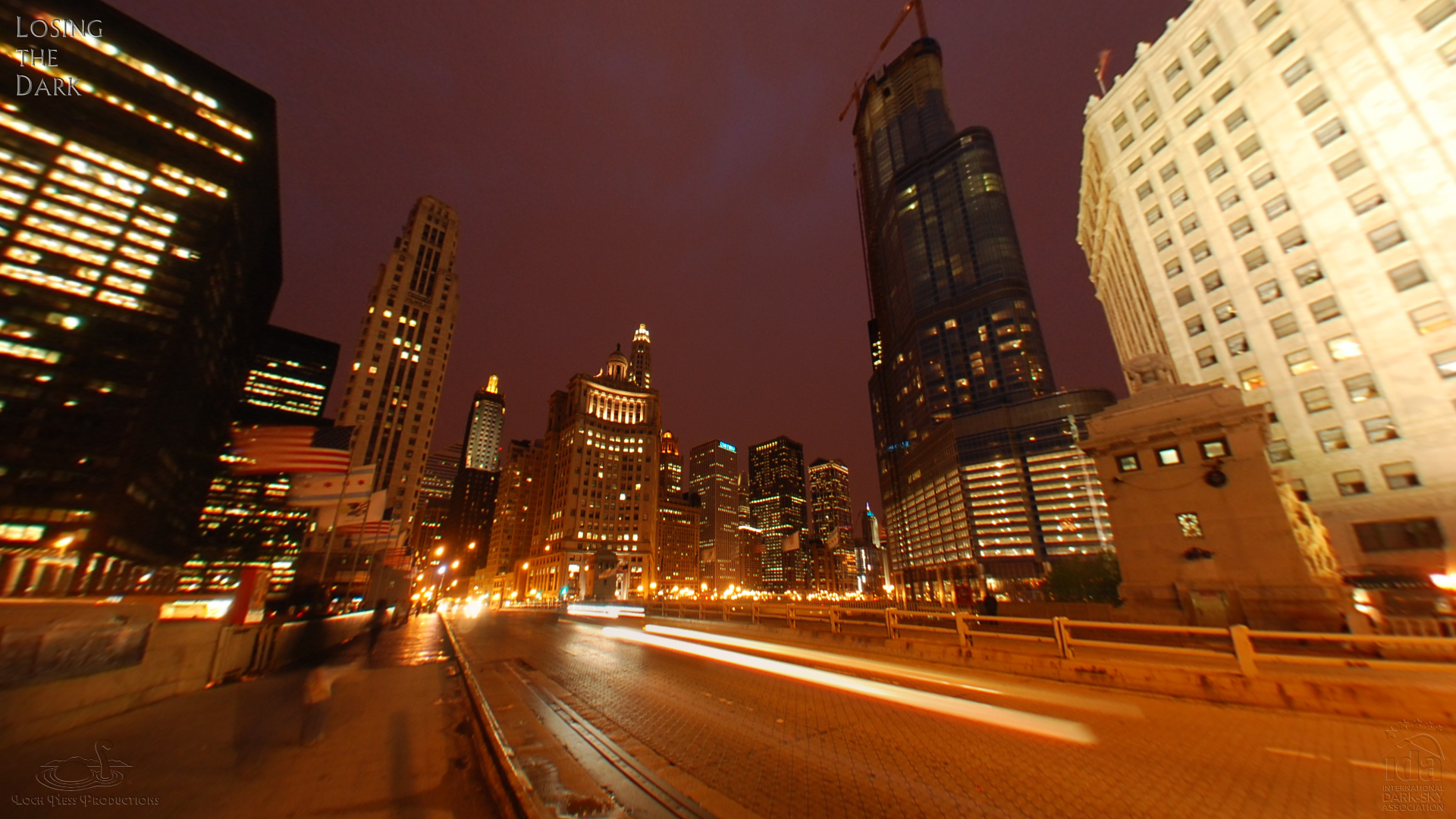
A still frame from Losing the Dark showing the glow of traffic and city lights in Chicago. This timelapse sequence was shot by Matt Mascheri, Dome3D. CREDIT: Loch Ness Productions/Dome3D.
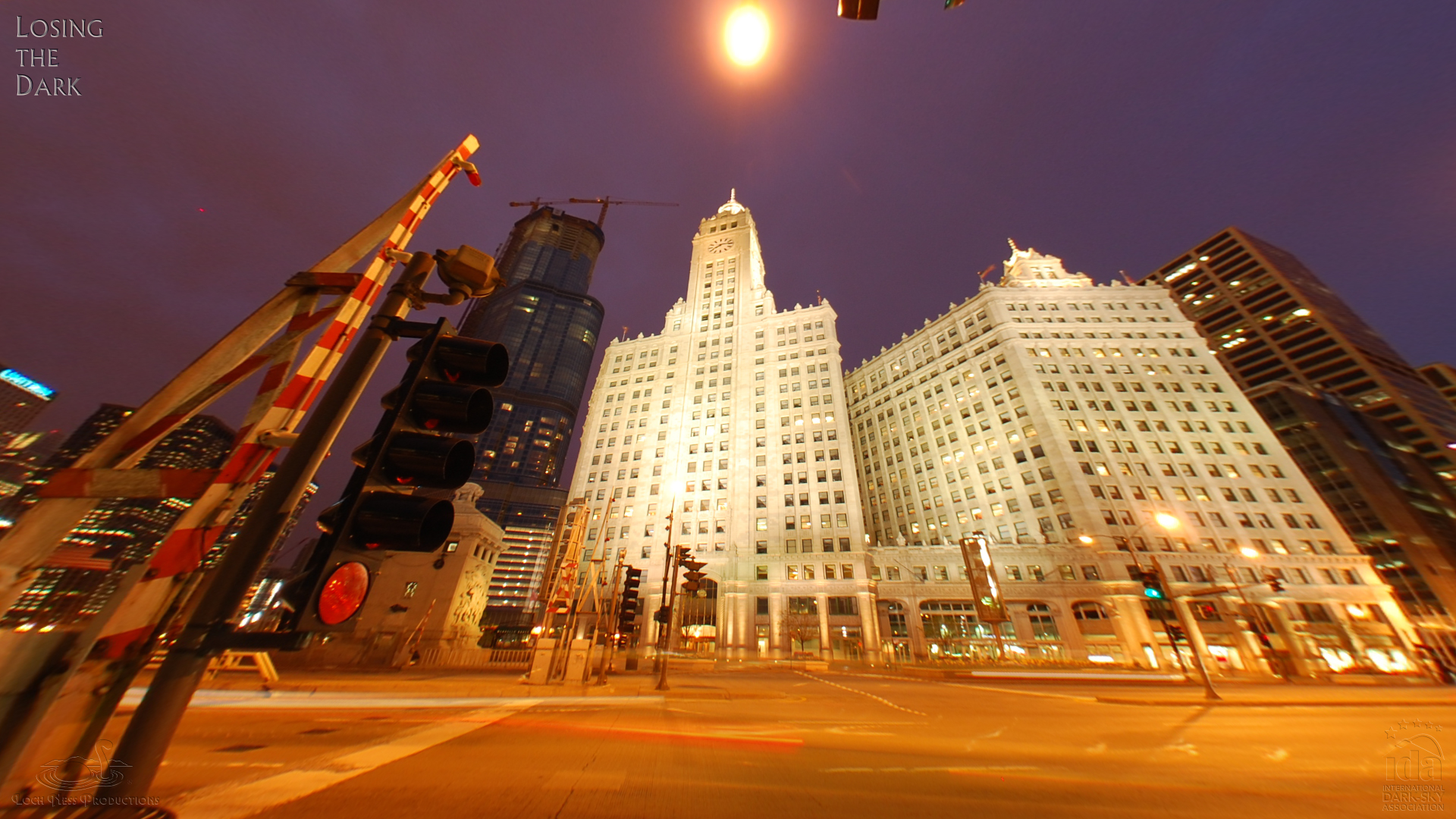
A still frame from Losing the Dark illustrating the glow of traffic and city lights in Chicago. This timelapse sequence was shot by Matt Mascheri, Dome3D. CREDIT: Loch Ness Productions/Dome3D.
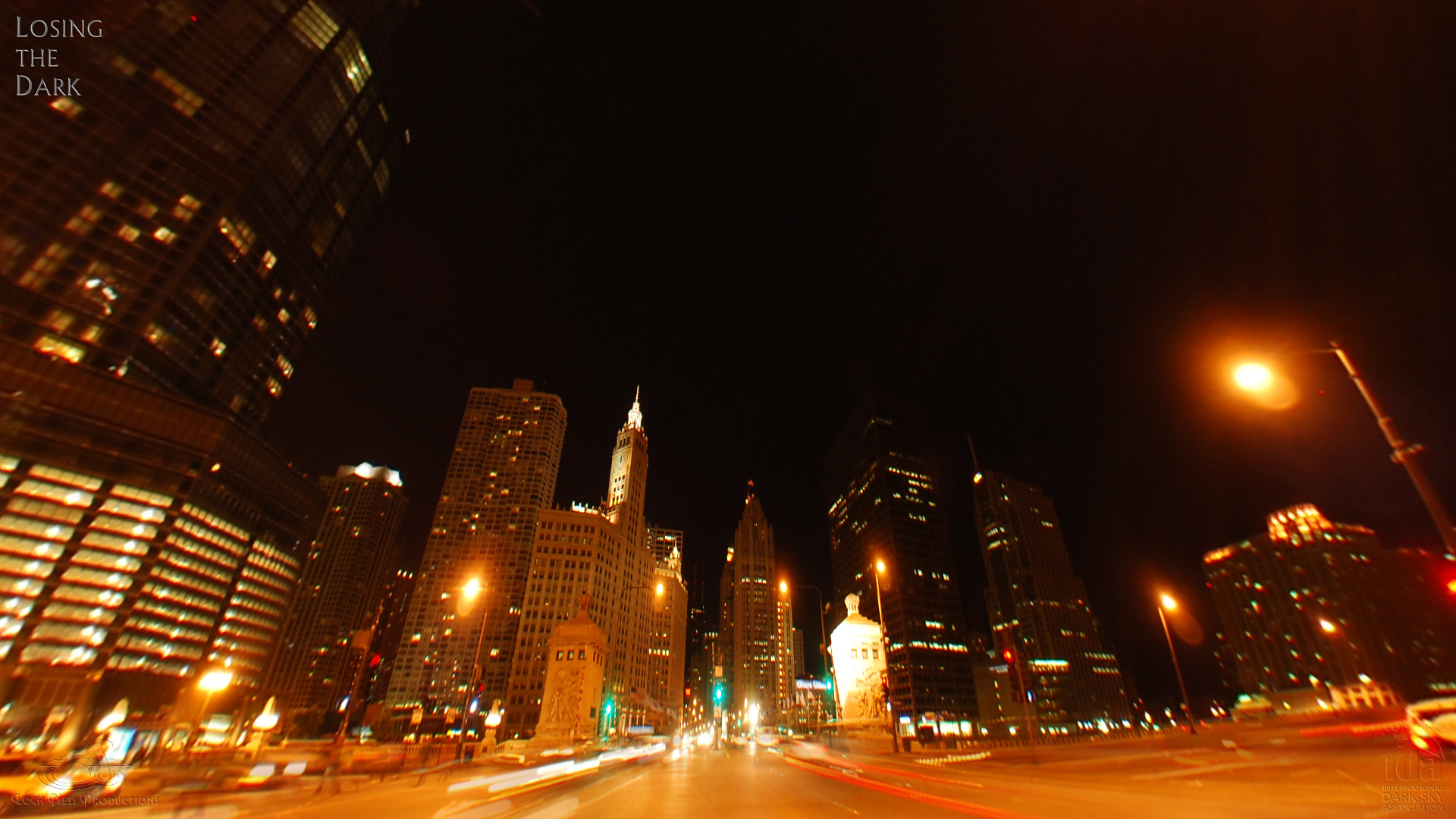
A still frame from Losing the Dark showing the glow of traffic and city lights in Chicago. This timelapse sequence was shot by Matt Mascheri, Dome3D. CREDIT: Loch Ness Productions/Dome3D.
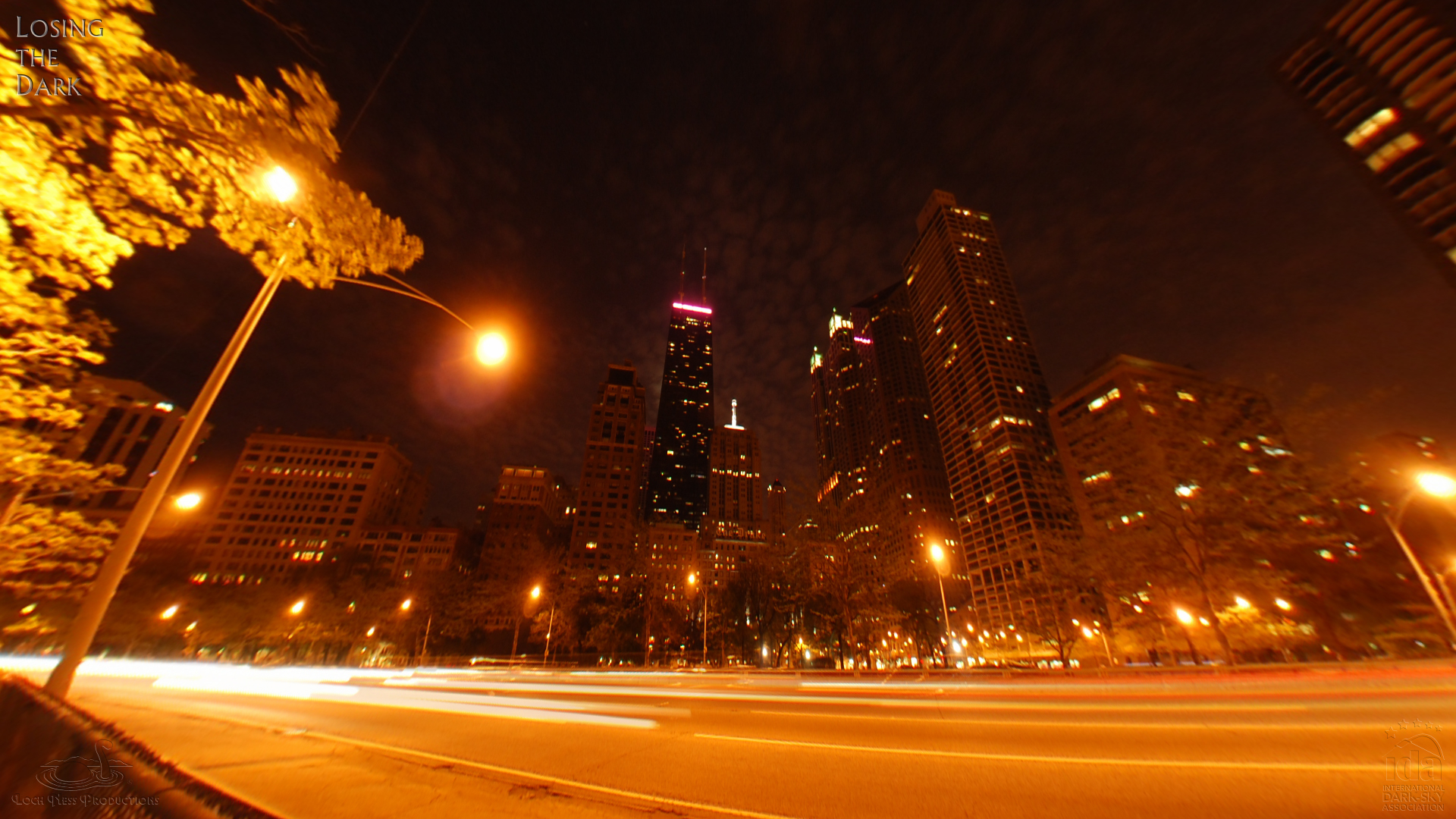
A still frame from Losing the Dark illustrating the glow of traffic and city lights in Chicago and how they affect pedestrians. This timelapse sequence was shot by Matt Mascheri, Dome3D. CREDIT: Loch Ness Productions/Dome3D.
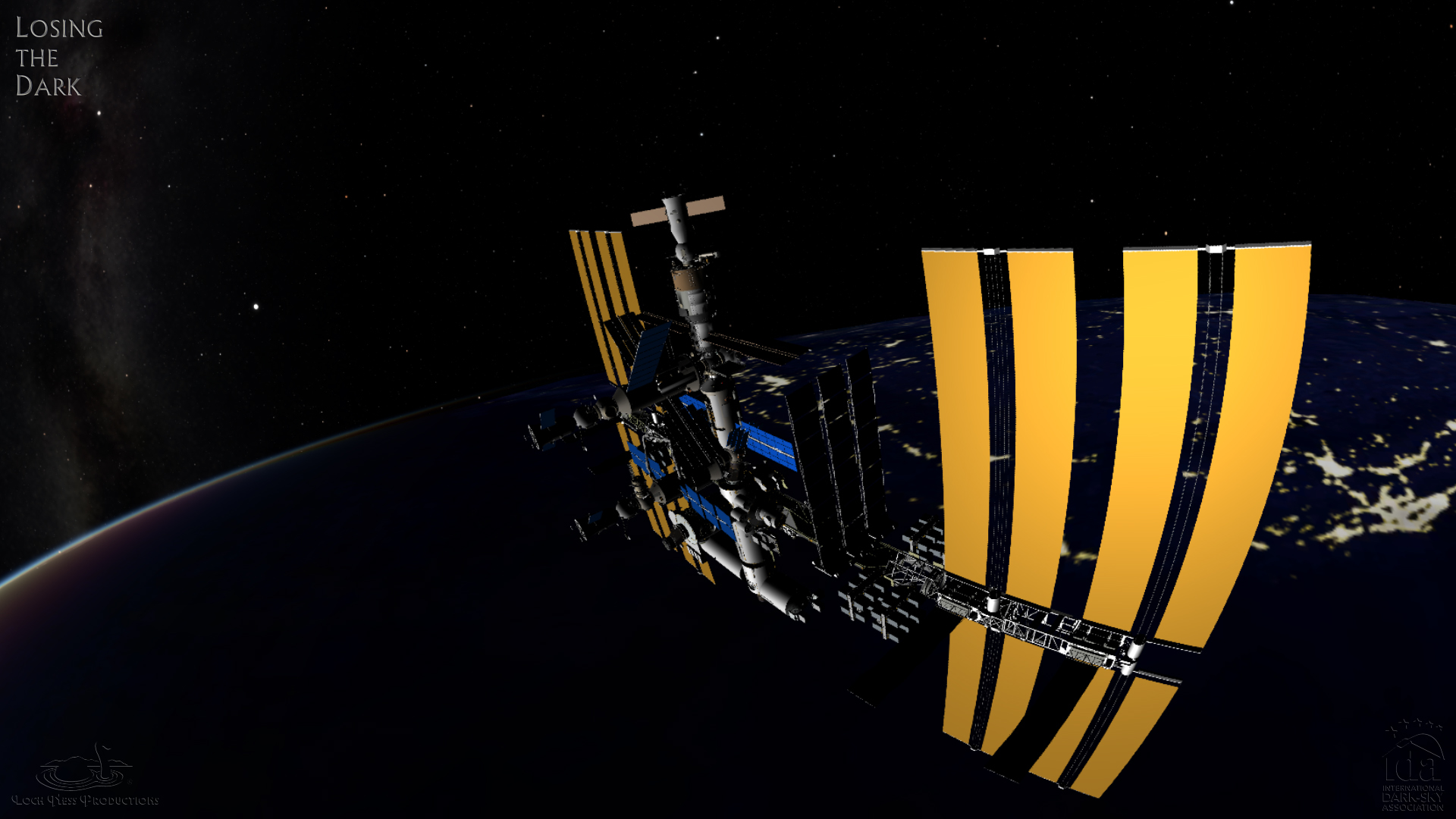
A still frame from Losing the Dark showing an ISS flyover. The sequence was created using DigitalSky2 from Sky-Skan. This animation depicts the flyover pass captured in the NASA video shown in the next scene. CREDIT: Loch Ness Productions/Sky-Skan.
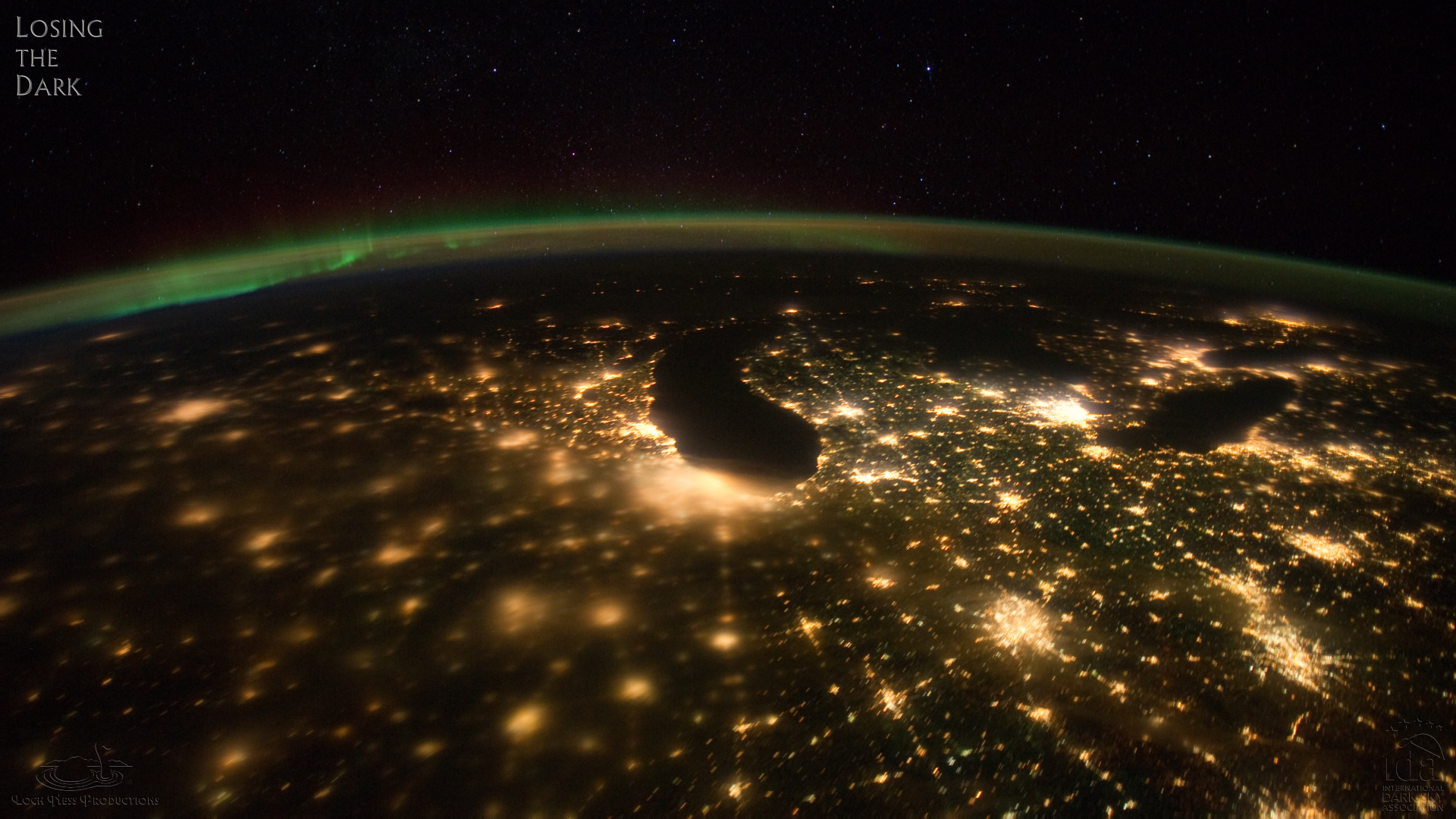
A still frame from Losing the Dark compositing a NASA ISS flyover of the Great Lakes region, prominently focused on Chicago. It illustrates how the skyglows from Earth's surface are easily visible from space. CREDIT: NASA.

A still frame from Losing the Dark showing birds flocking toward lights and brightly lit buildings. Created from artwork supplied by Adler Planetarium and CG animation by Dome3D. CREDIT: Loch Ness Productions/Dome3D.
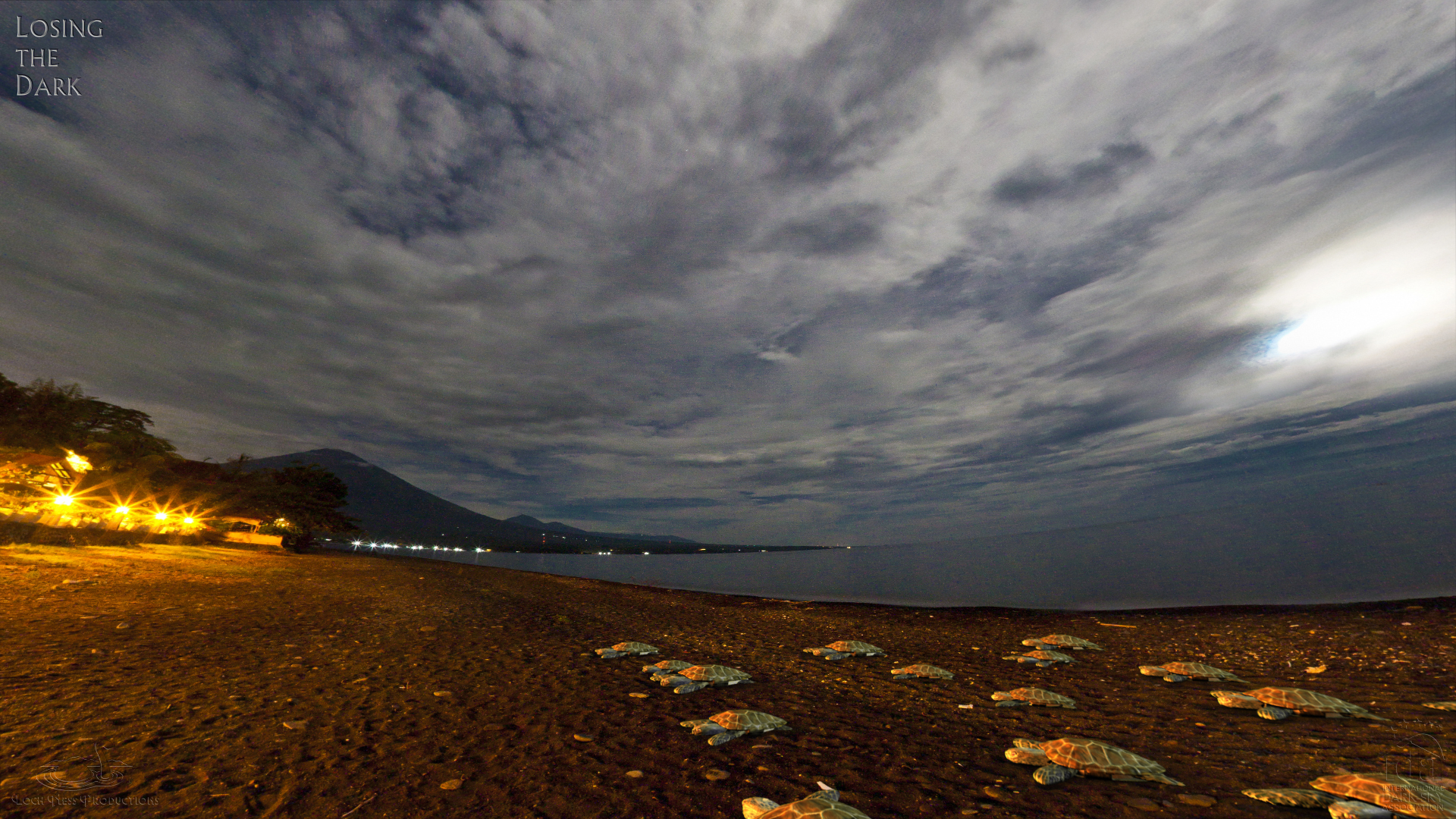
A still frame from Losing the Dark showing how sea turtles can become disoriented by artificial lights and lured away from the safety of their ocean habitat. CREDIT: Loch Ness Productions/ Gregory Panayotou, 360Cities.net/Dome3D.
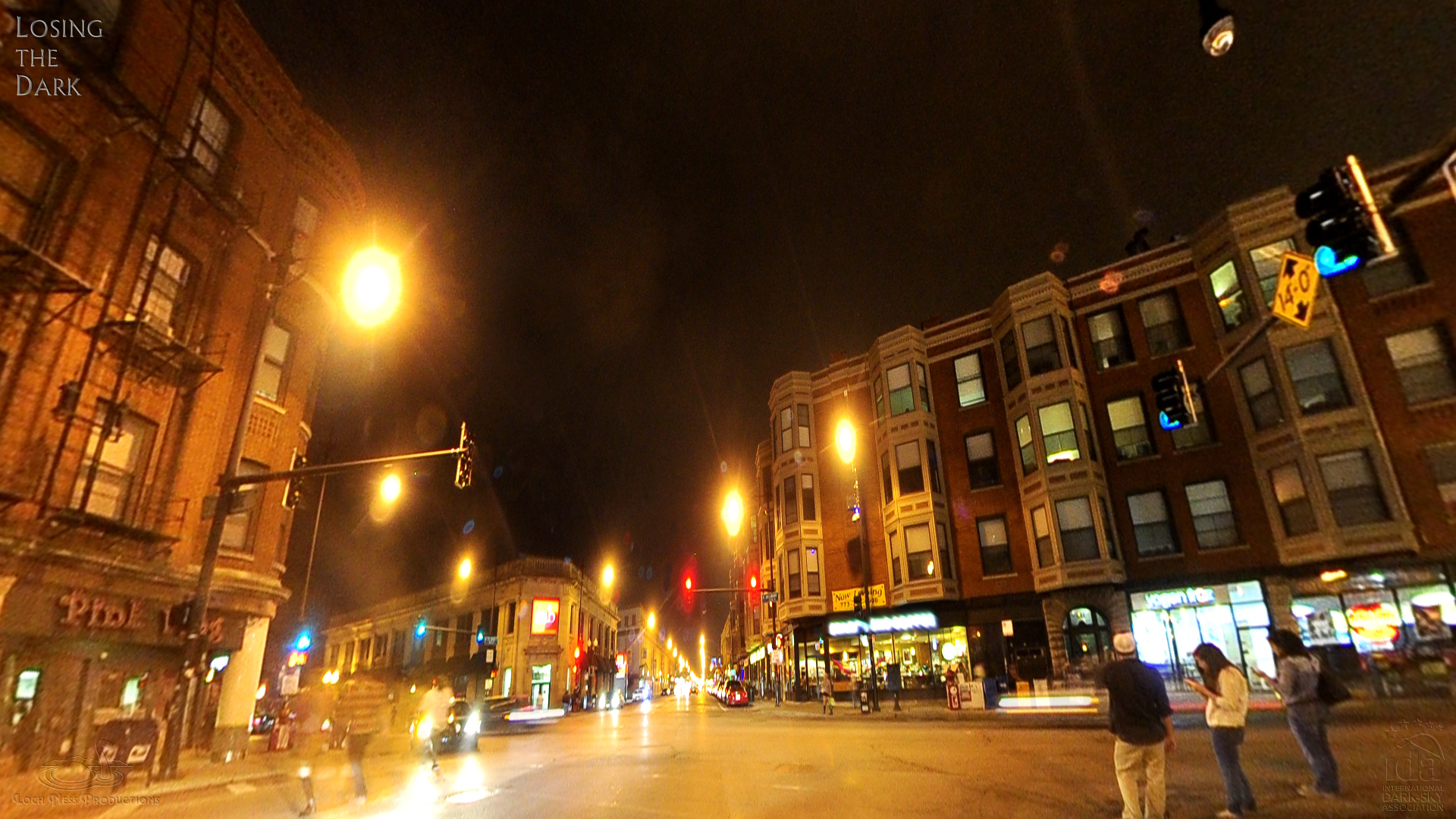
A still frame from Losing the Dark illustrating the glow of traffic and city lights in Chicago and how they affect pedestrians. This was shot by Matt Mascheri, Dome3D. CREDIT: Loch Ness Productions/Dome3D.
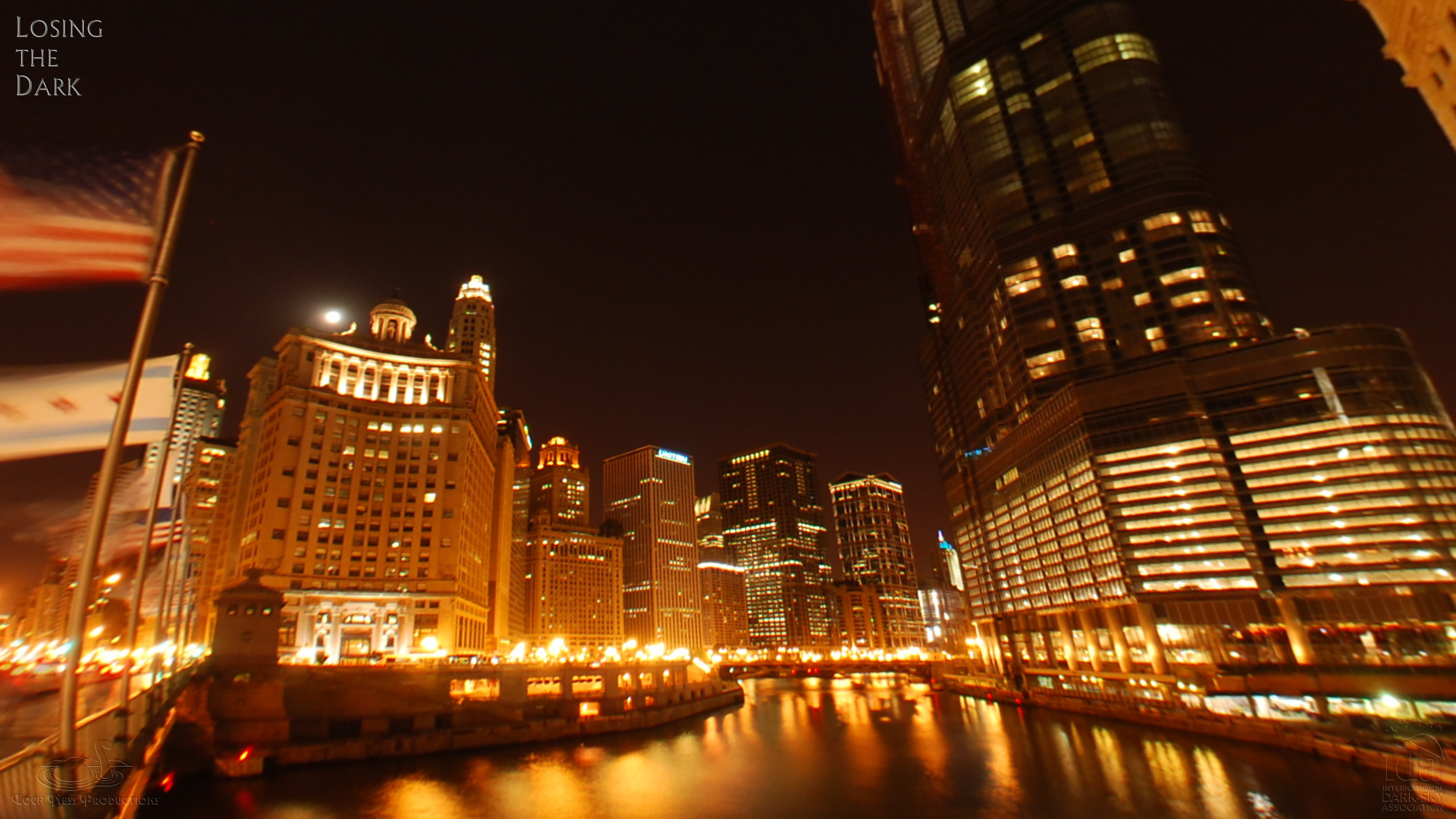
A still frame from Losing the Dark illustrating the glow of Chicago's city lights, explaining how light at night disrupts people's sleep rhythms. This was shot by Matt Mascheri, Dome3D. CREDIT: Loch Ness Productions/Dome3D.
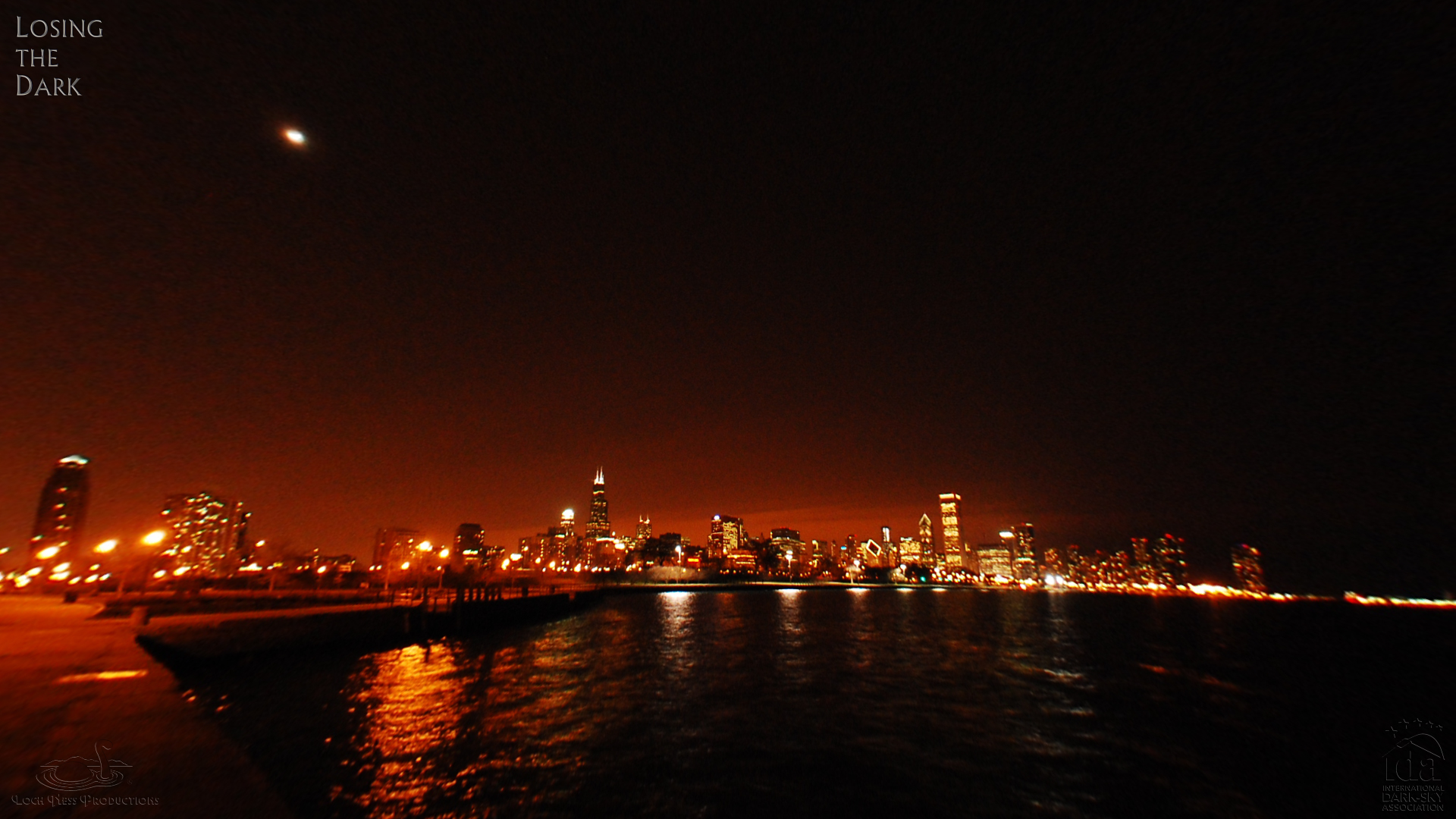
A still frame from Losing the Dark illustrating the glow of Chicago's city lights, explaining how light at night disrupts people's sleep rhythms. This was shot by Matt Mascheri, Dome3D. CREDIT: Loch Ness Productions/Dome3D.
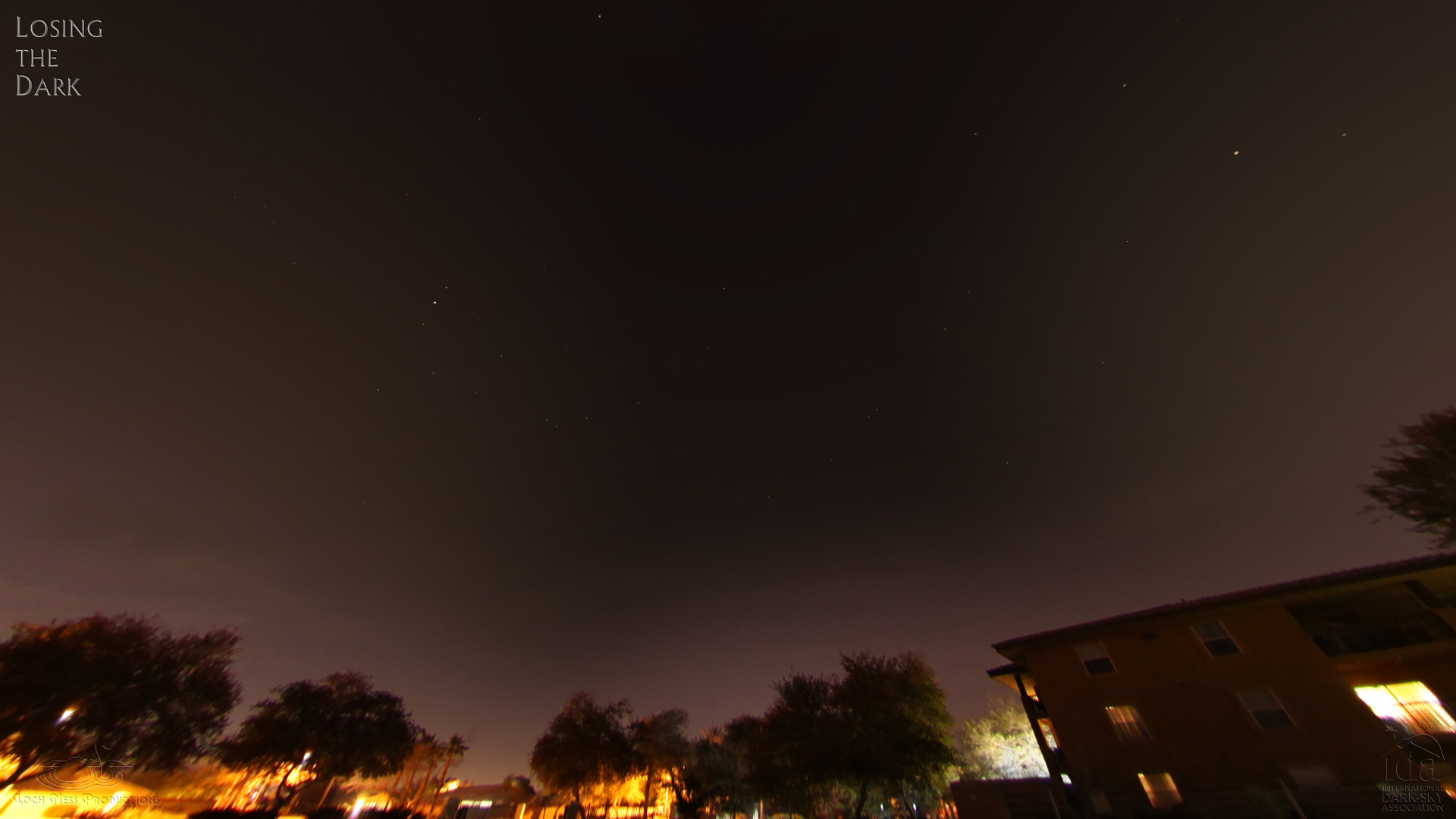
A still frame from Losing the Dark illustrating skyglow over Phoenix, Arizona. Shot by Carolyn Collins Petersen, composited with stars generated by DigitalSky2 from Sky-Skan. CREDIT: Loch Ness Productions.
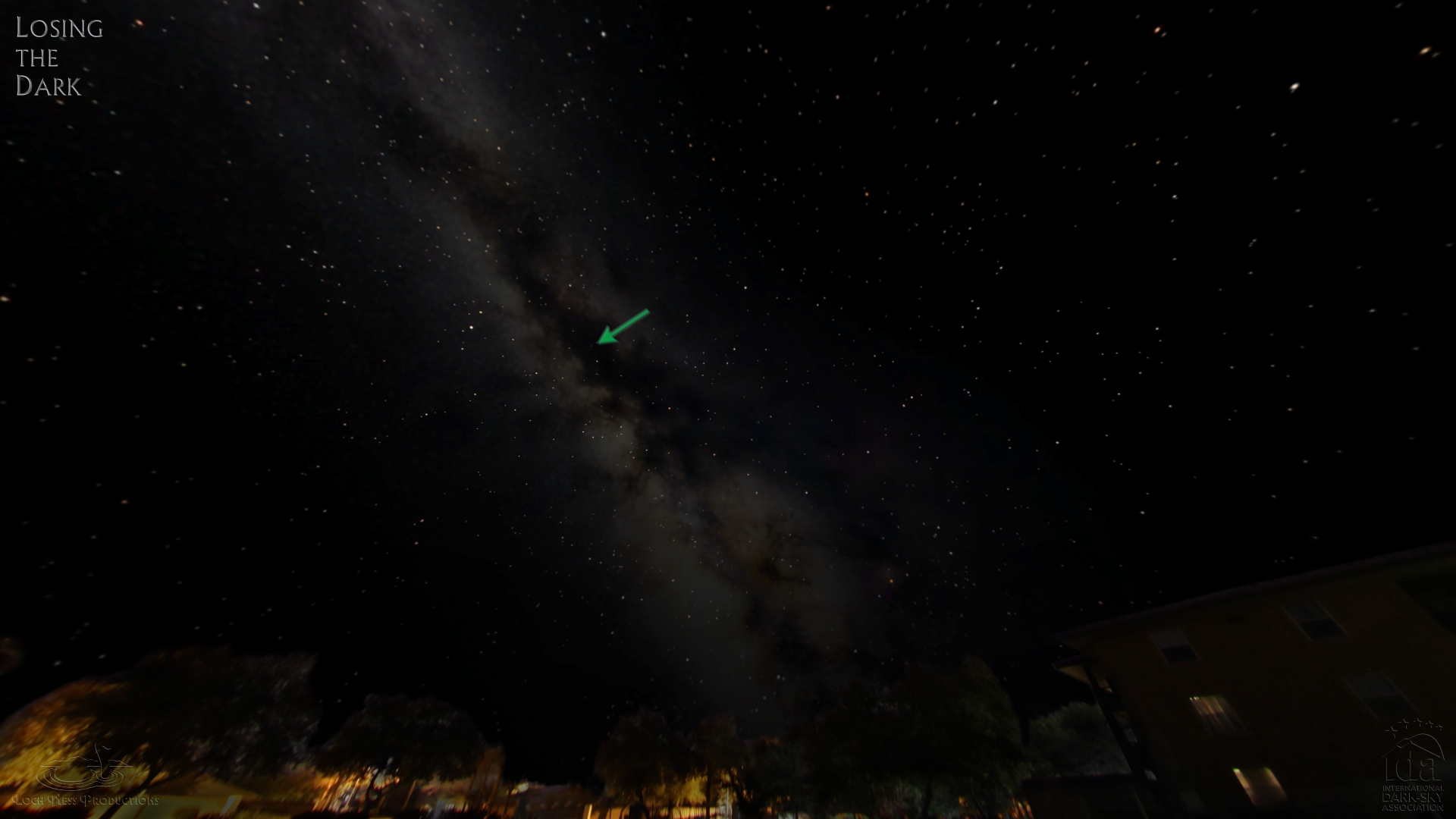
A still frame from Losing the Dark illustrating what the skies might look like over Phoenix, Arizona if much of the light pollution could be removed. Shot by Carolyn Collins Petersen, composited with stars generated by DigitalSky2 from Sky-Skan. CREDIT: Loch Ness Productions.
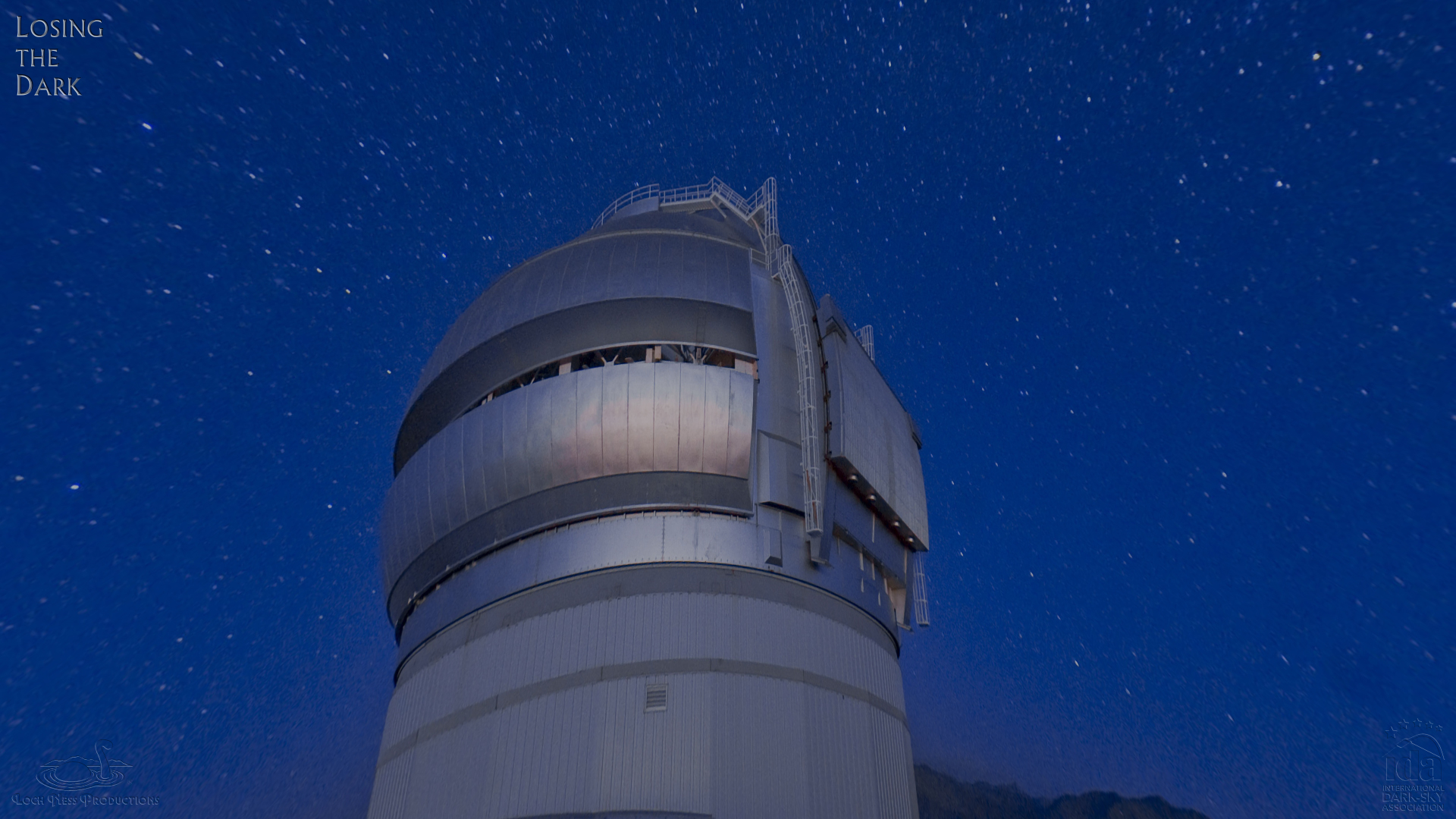
A still frame from Losing the Dark showing Gemini Observatory and dark skies in a timelapse sequence. Courtesy Gemini Obervatory. CREDIT: Loch Ness Productions/Gemini Observatory.
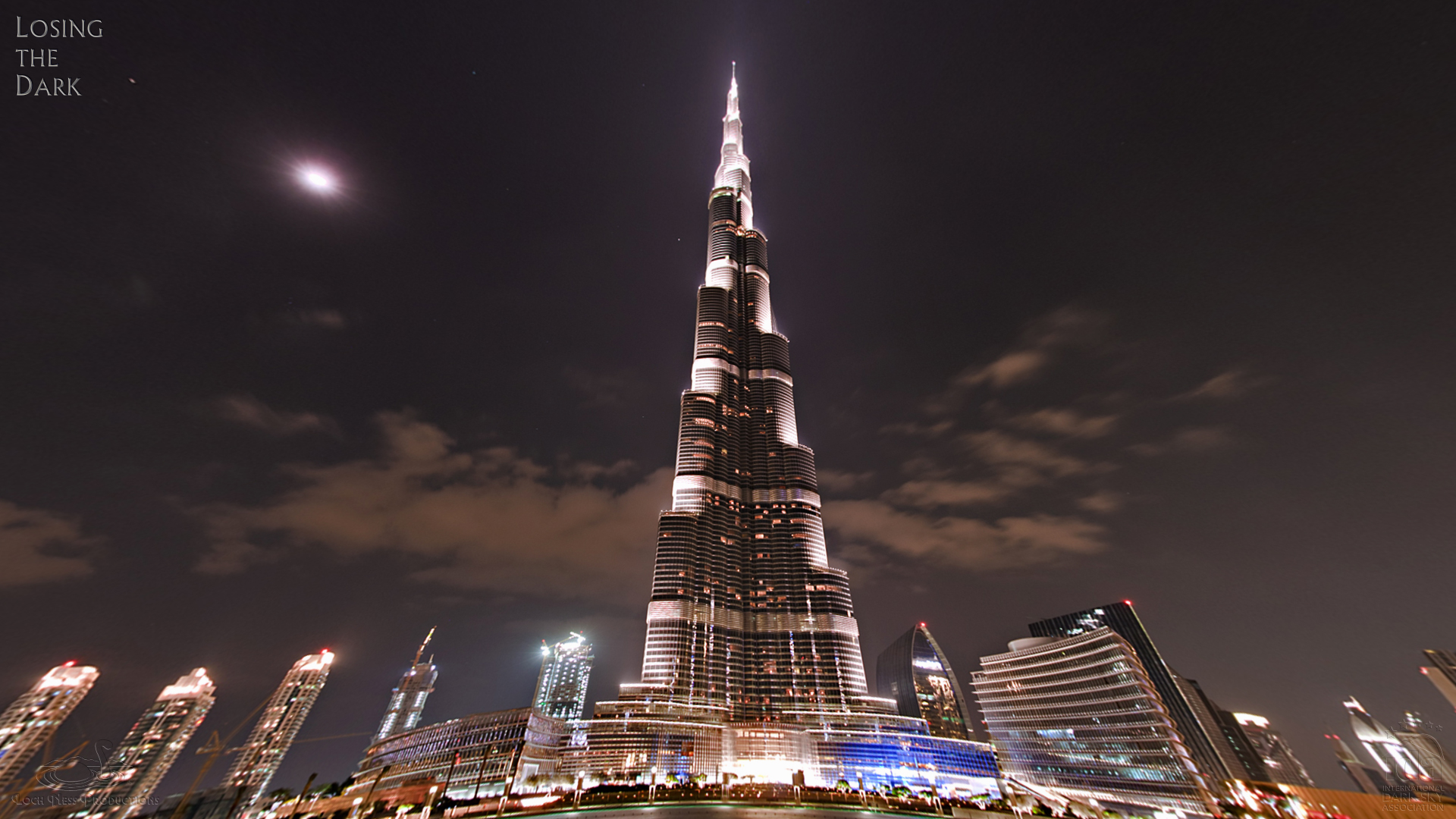
This still frame from Losing the Dark features photographer Babak Tafreshi's view of the brightly lit Khalifa Tower in Dubai, United Arab Emirates. Used by permission. CREDIT: Loch Ness Productions/Babak Tafreshi/TWAN.
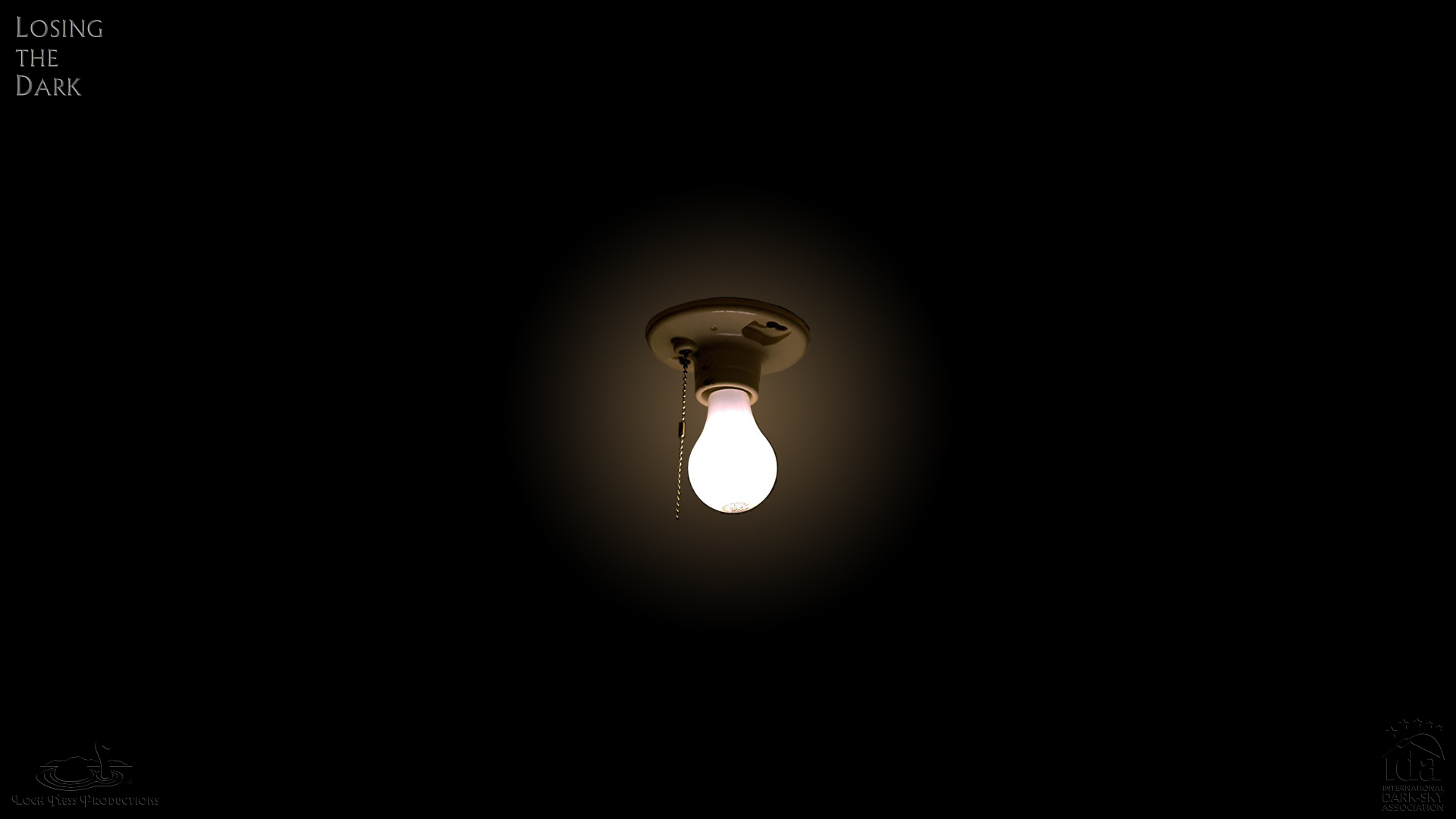
A still frame from Losing the Dark metaphorically illustrating the power required to illuminate a single 100-watt light bulb. CREDIT: Loch Ness Productions.
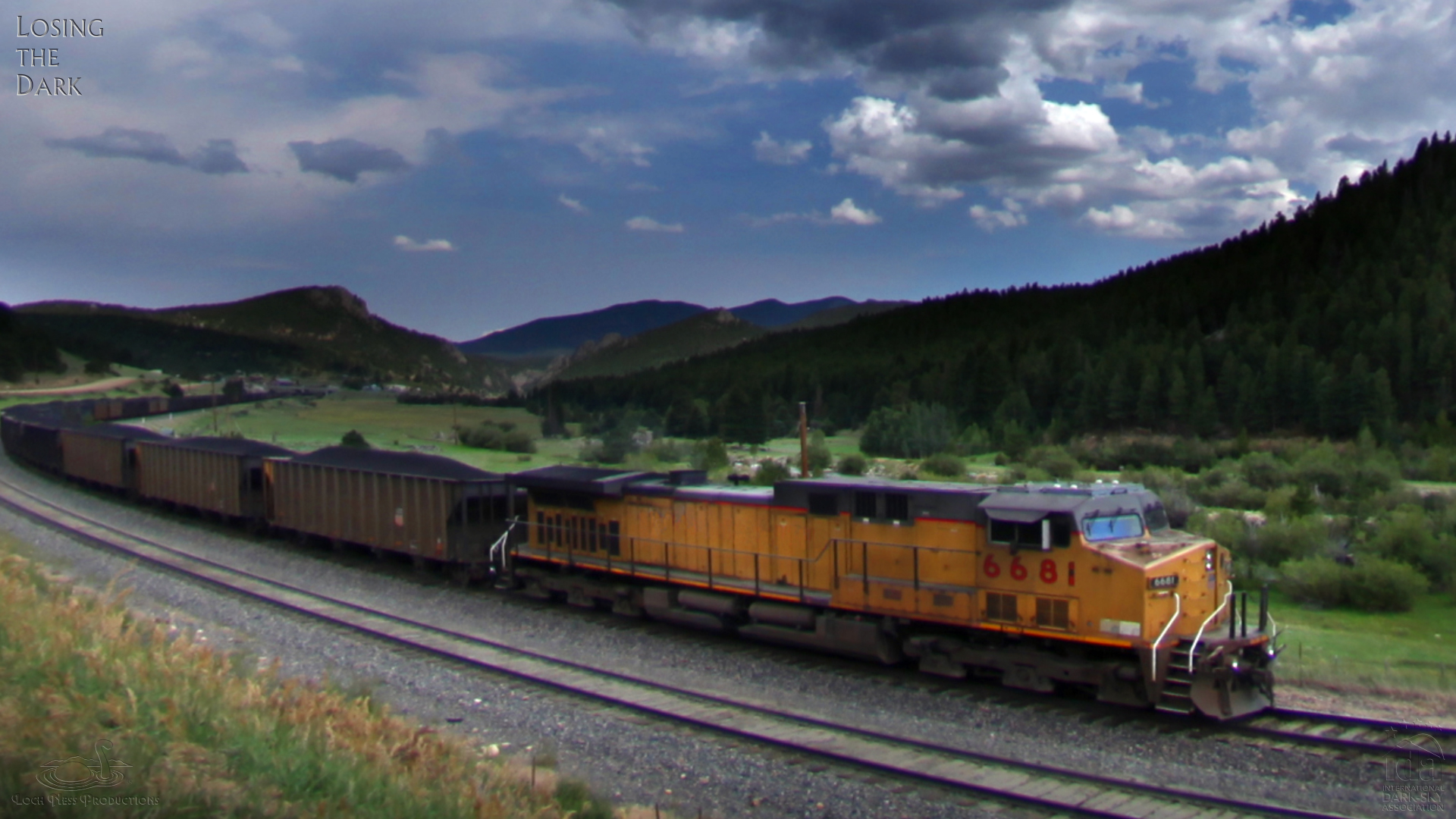
A still frame from Losing the Dark showing a coal train, metaphorically illustrating the amount of fuel needed to keep many 100-watt light bulbs lit for a year. Shot by Mark C. Petersen. CREDIT: Loch Ness Productions.
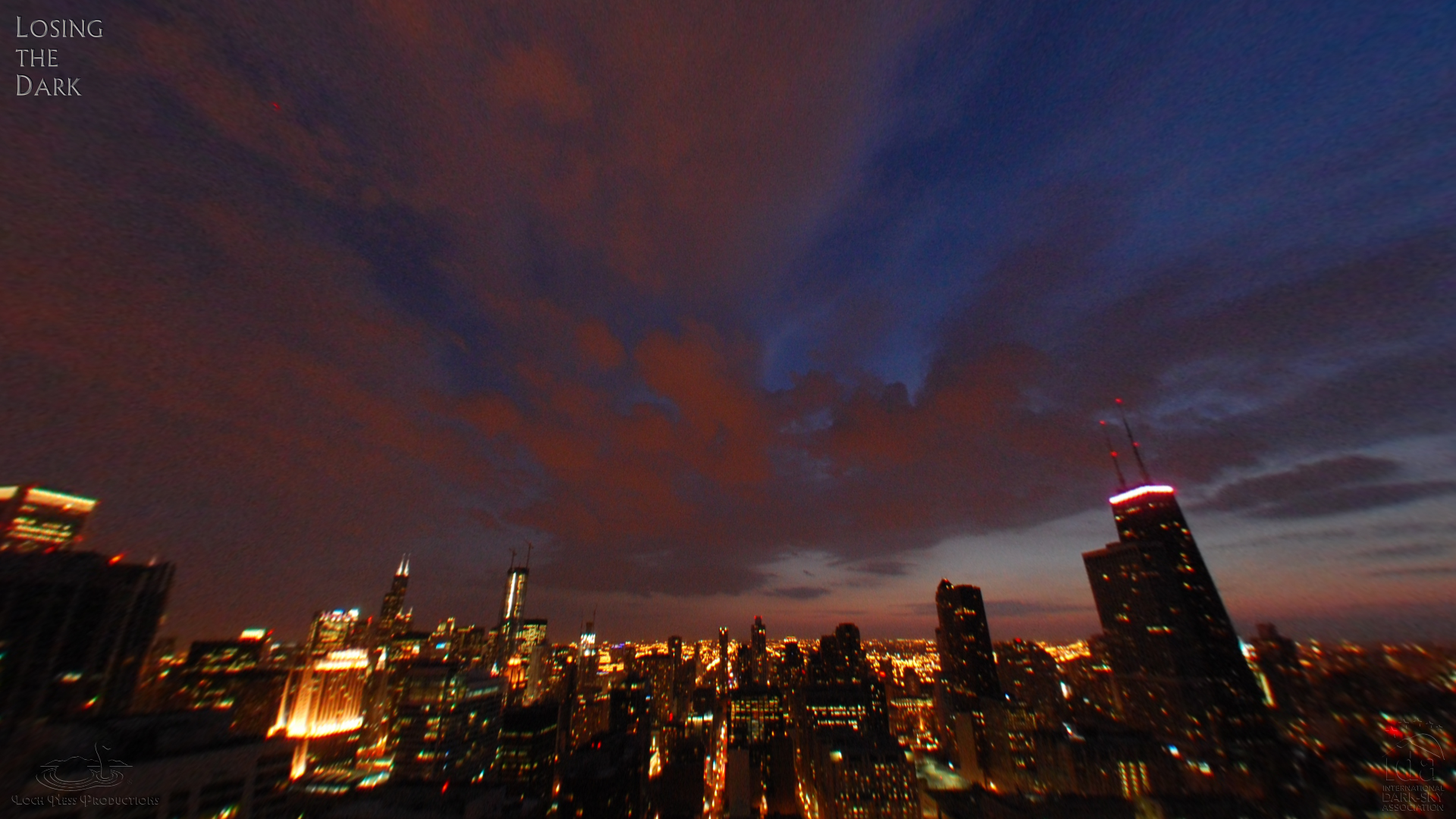
A still frame from Losing the Dark from a time-lapse sequence of Chicago at night shot by Matt Mascheri, Dome3D. CREDIT: Loch Ness Productions/Dome3D.
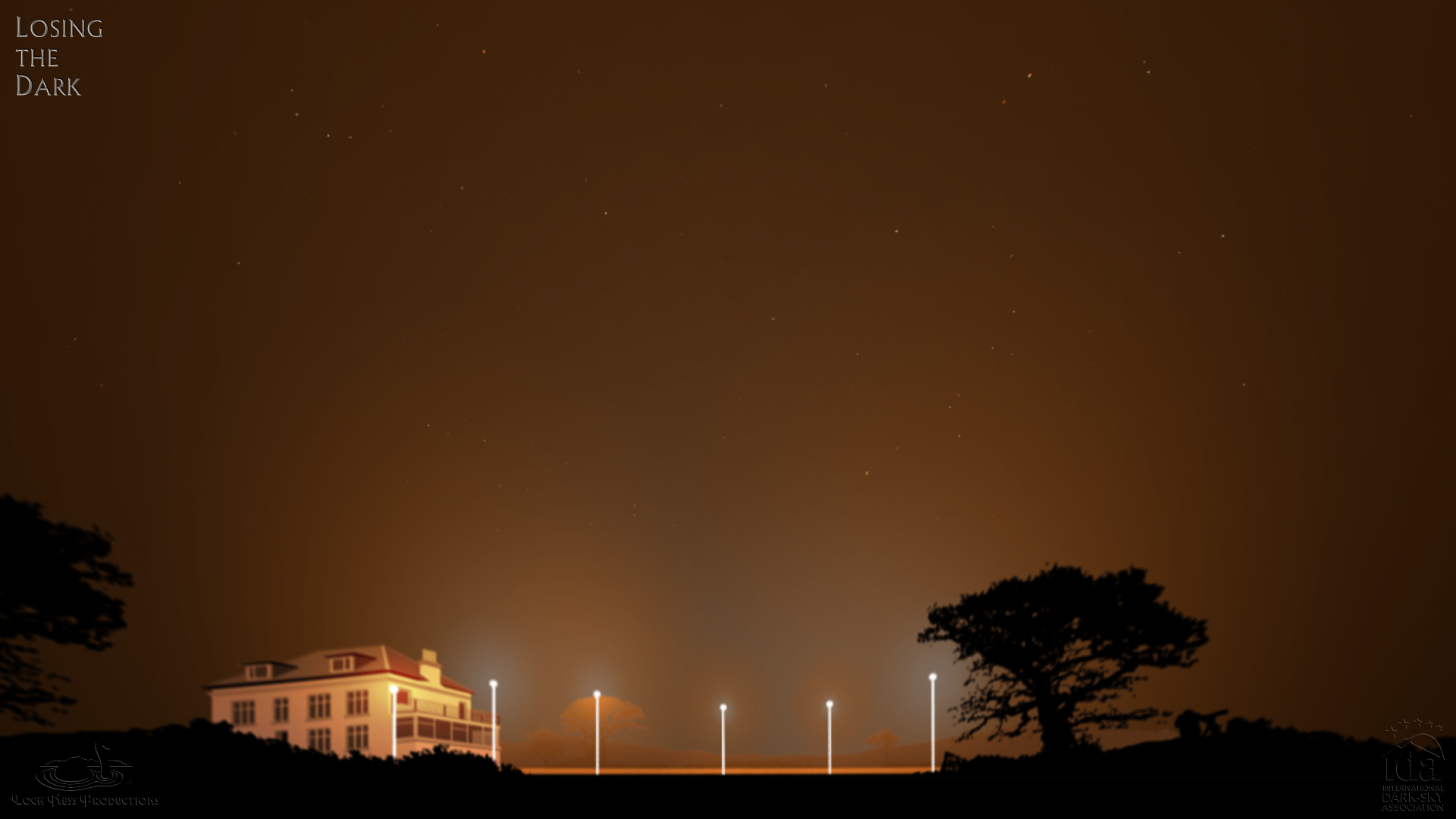
A still frame from Losing the Dark illustrating the effect that unshielded lights have on the sky. Art based on the Light Pollution Simulator at the Need-Less Campaign by Don Nixon. CREDIT: Loch Ness Productions.

A still frame from Losing the Dark illustrating the effect that using fully shielded lights can have on the sky. Art based on the Light Pollution Simulator at the Need-Less Campaign by Don Nixon. CREDIT: Loch Ness Productions.
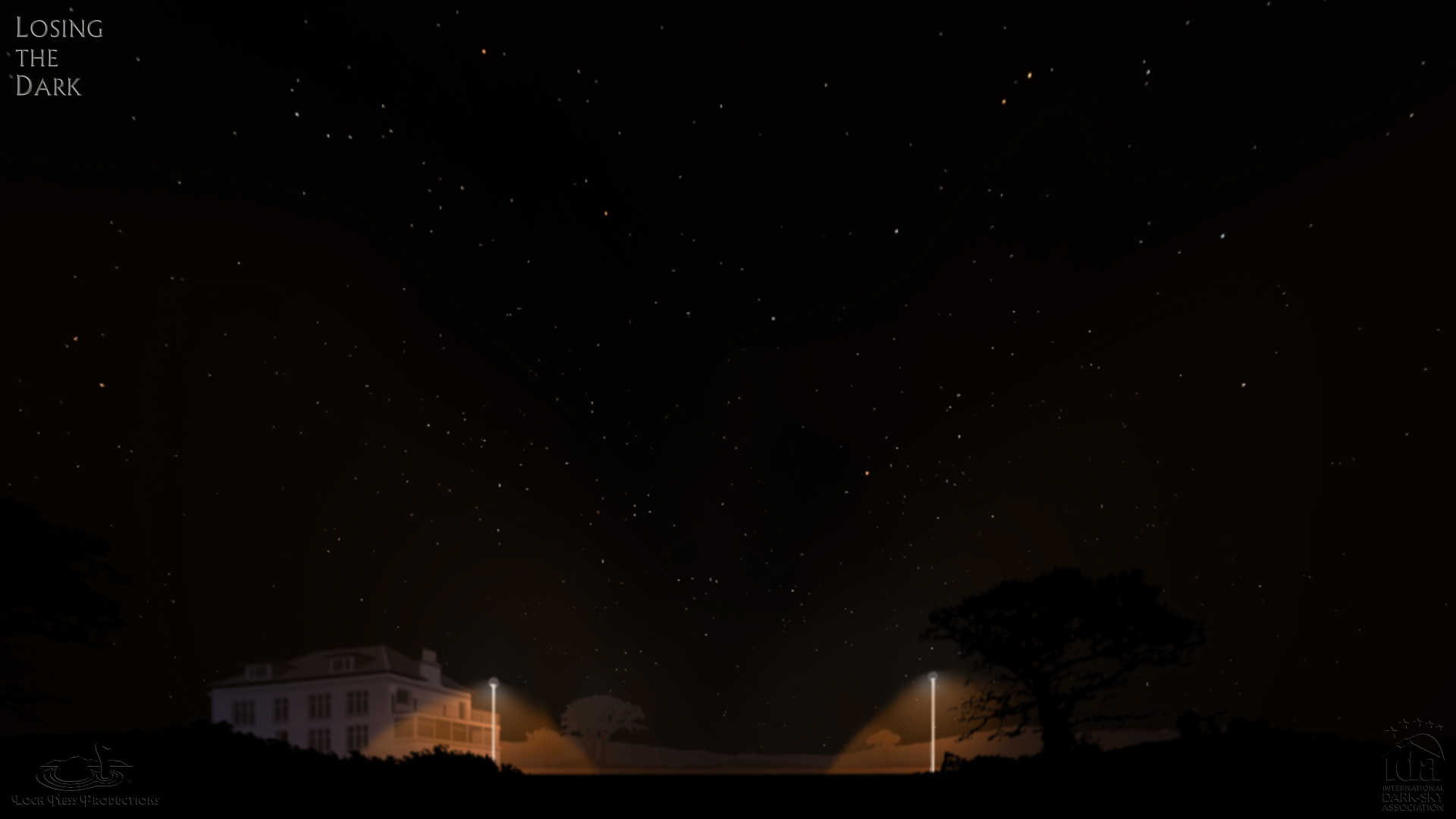
A still frame from Losing the Dark illustrating the effect that using fully shielded lights and turning off unnecessary lights have on the sky. Art based on the Light Pollution Simulator at the Need-Less Campaign by Don Nixon. CREDIT: Loch Ness Productions.
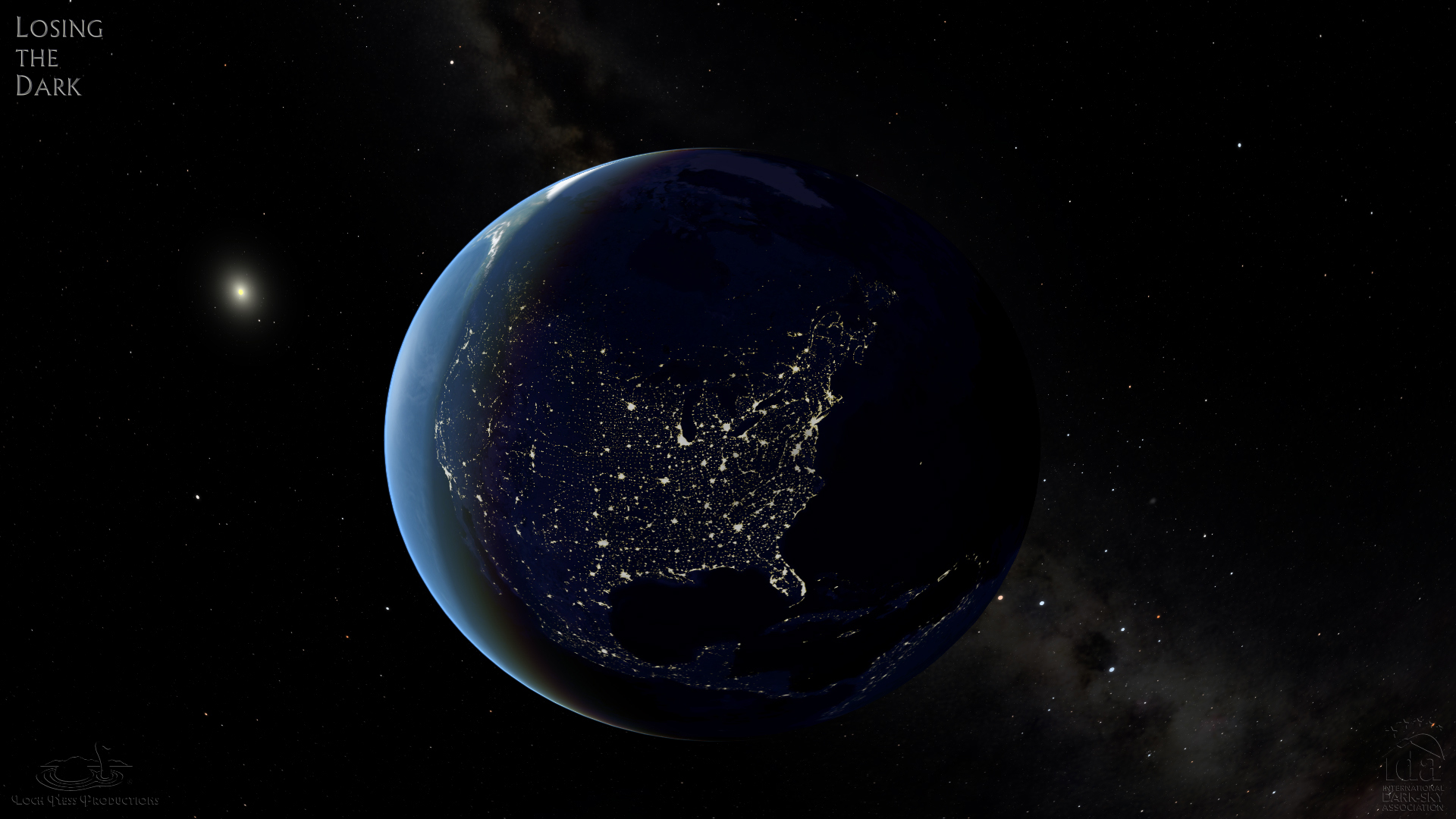
A still frame from closing sequence in Losing the Dark showing a brightly lit North America, set against a backdrop of the Milky Way. This image was created using DigitalSky2 from Sky-Skan, Inc. CREDIT: Loch Ness Productions/Sky-Skan.
A still frame from closing sequence in Losing the Dark with production credits superimposed over a brightly lit North America. This image was created using DigitalSky2 from Sky-Skan, Inc. CREDIT: Loch Ness Productions/Sky-Skan.
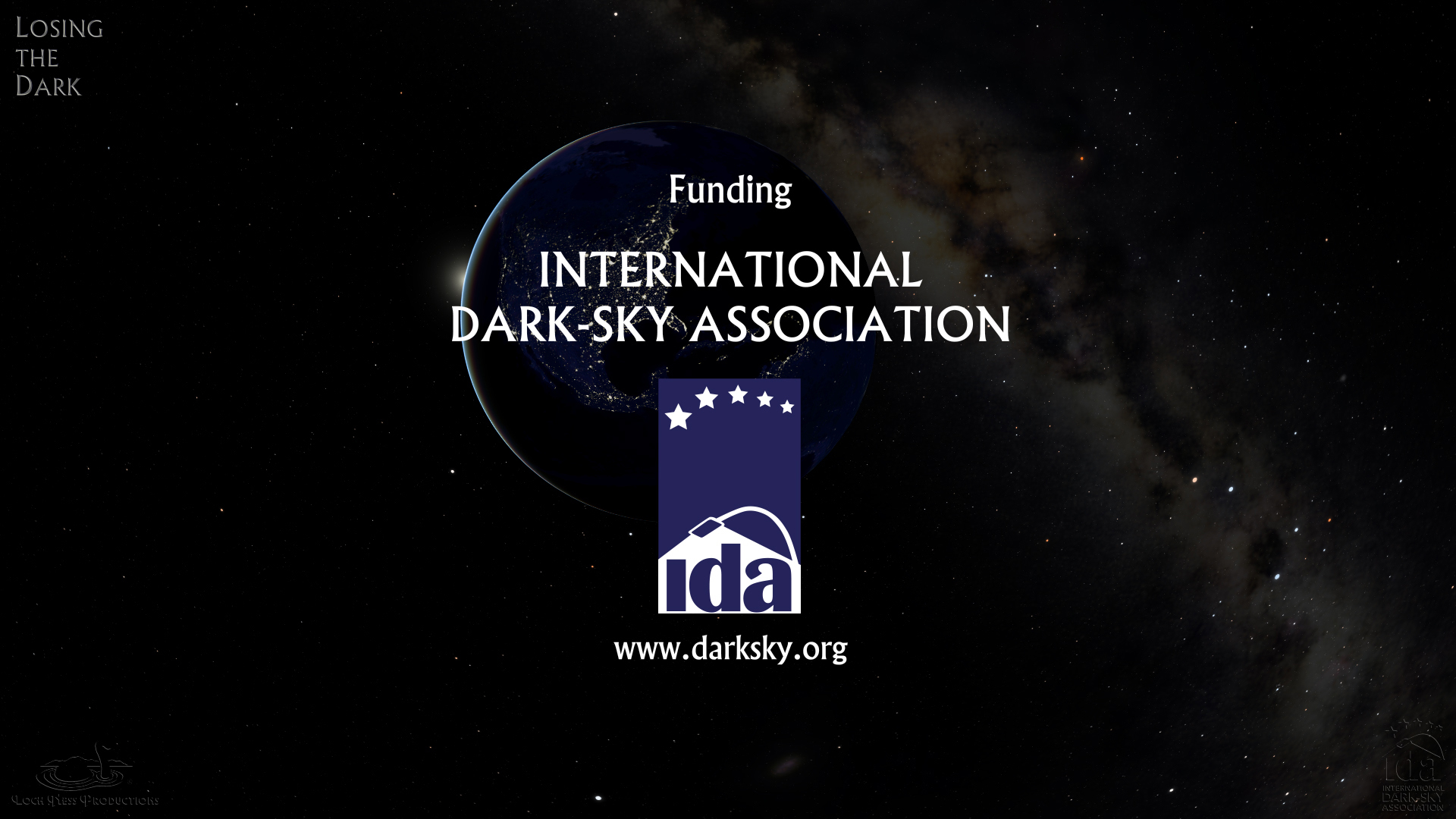
A still frame from closing sequence in Losing the Dark with the International Dark-Sky Association logo superimposed over a brightly lit North America. This image was created using DigitalSky2 from Sky-Skan, Inc. CREDIT: Loch Ness Productions/Sky-Skan.
