


 Info
Info Previews
 Prices
 Print flyer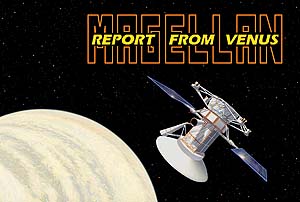
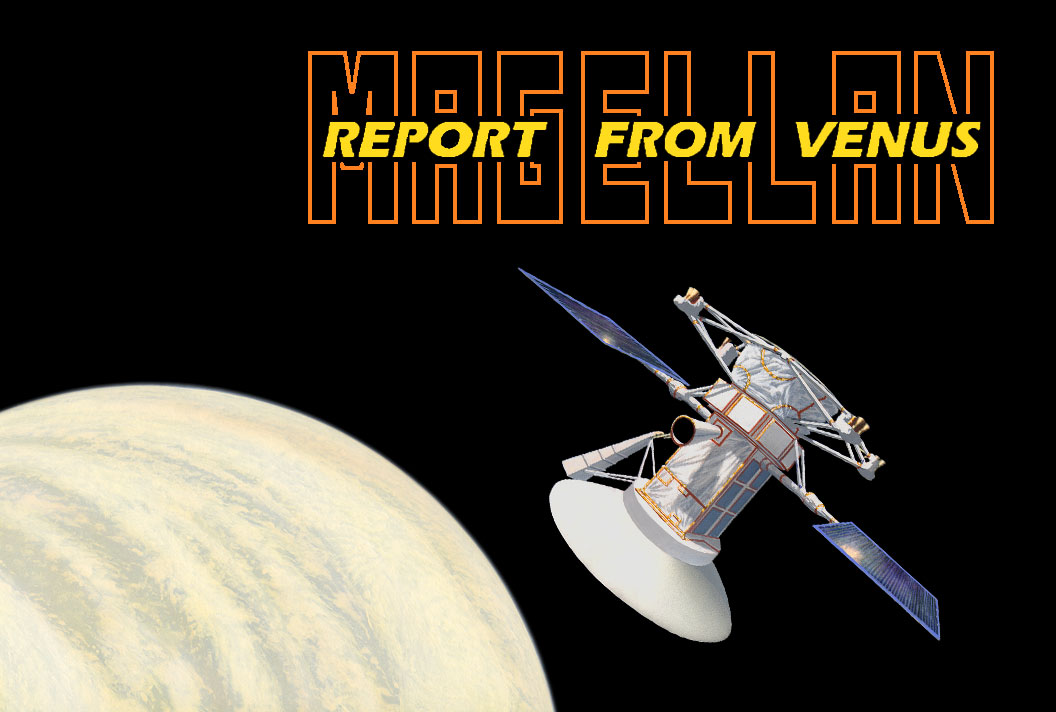
MAGELLAN: Report From Venus
Explore Venus — Earth's mysterious next-door neighbor in space!
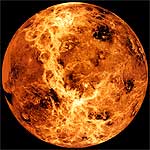 The Magellan radar-mapping mission to Venus was extraordinarily successful; the spacecraft returned more data than all NASA's previous planetary missions combined. Now, MAGELLAN: Report From Venus brings Magellan's images to you and your audiences!
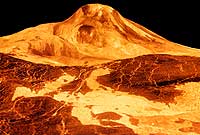 We follow Magellan's progress from its launch through the most significant discoveries. Because Venus's clouds keep us from seeing the surface directly, scientists used radar imaging techniques to map the planet's broken and jumbled terrain.
Included are spectacular images of Venus volcanoes, showing the wide variety of forms that volcanic action takes on this desolate world. Landslides also carve the terrain of Venus, proving that tectonism helps to shape the planet's surface.
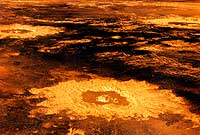 Impact craters caused by incoming space debris are scattered across the Venerian surface.
These three processes are familiar to us here on Earth; finding them at work on Venus allows opportunities to compare Venus with our home planet.
Along with its sister planetary shows The Voyager Encounters and MarsQuest, MAGELLAN: Report From Venus is an excellent way to present the wonders of the solar system to audiences.
Running time: 29:00
Age level: General public
Year of production: 1992, 1995
Words expertly crafted by Carolyn Collins Petersen
Stereo soundtrack with original music by Geodesium
The educational focus of MAGELLAN: Report From Venus is to present the mapping and exploration of the planet Venus by the Magellan spacecraft, while emphasizing the understanding of processes that shape the planet via a set of multidisciplinary themes woven throughout the program. These ideas help relate the information presented in the show to the lives of students, families, and the general public.
Show content is relevant in the following subject areas:
Earth and Space Sciences:- Objects in the sky: Venus
- Venus surface geology: volcanism, cratering, tectonism, atmospheric characteristics
- Venus rotation period, orbit
- Comparative planetology of Earth and Venus
- Appearance from Earth
Physical Science:
- The electromagnetic spectrum: radar
History of Science/Science Inquiry:
- History of Venus exploration
- Use of radar mapping tools for planetary exploration
LOGOS (select for high-resolution)

(1056 x 712 pixels, 524K)
(1056 x 712 pixels, 368K)
(1056 x 712 pixels, 364K)
- None yet!
Shows from Loch Ness Productions come with English language soundtracks standard. Translated soundtracks are provided as additional items, not substitutes for the English ones.
Don't see the language you want? Let's work together to create it. Read more here!
